2019
Cells
Watercolour and charcoal on paper
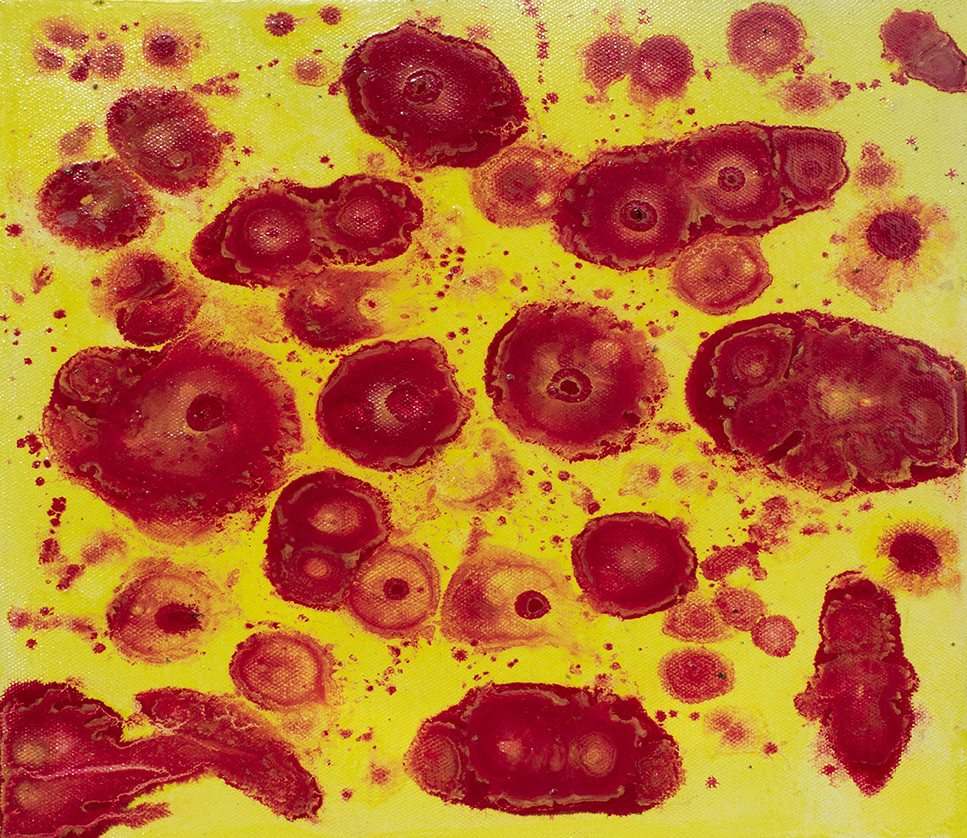
Yellow-Cell, Green-Cell, Cell, Transmutation. Four works — the cellular studies that preceded the neuron series.
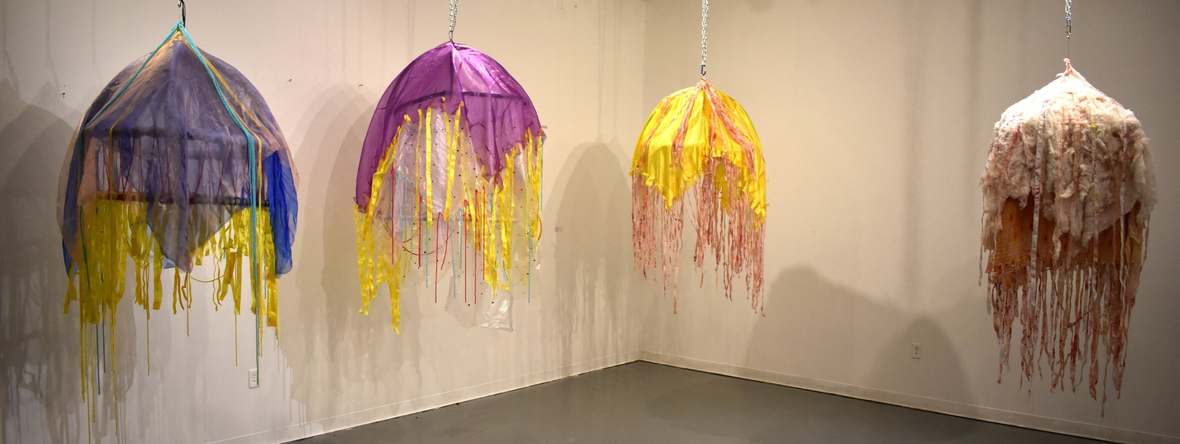
I map the brain’s physiological architecture at the scale of a body — chambers of printed textile, pulp and light that you step inside.
Ten years of work on one subject: how the brain builds a world, and what it costs when that process is under strain.
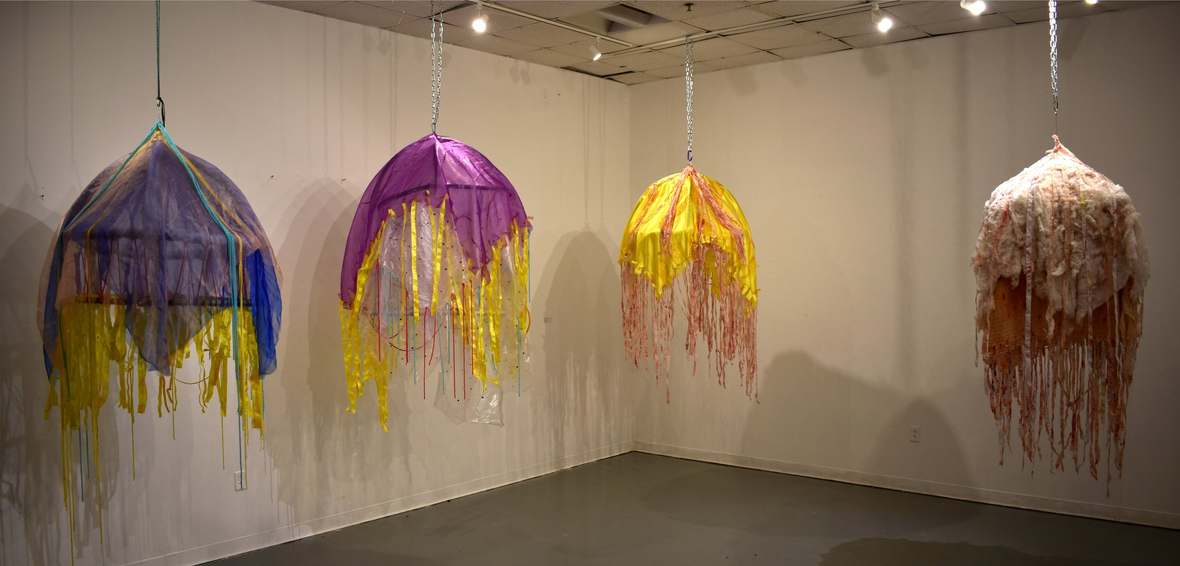
Installation · Printmaking · Papermaking · Light & projection
Four chambers, one sense each. You do not look at them; you stand inside them.
Painting & drawing
Three works where the sensory and the political stop being separate questions.
Installation · Digital & 3D · Sculpture
An interactive installation on racial injustice in brain science, made with Flor Delgadillo.
Painting & drawing
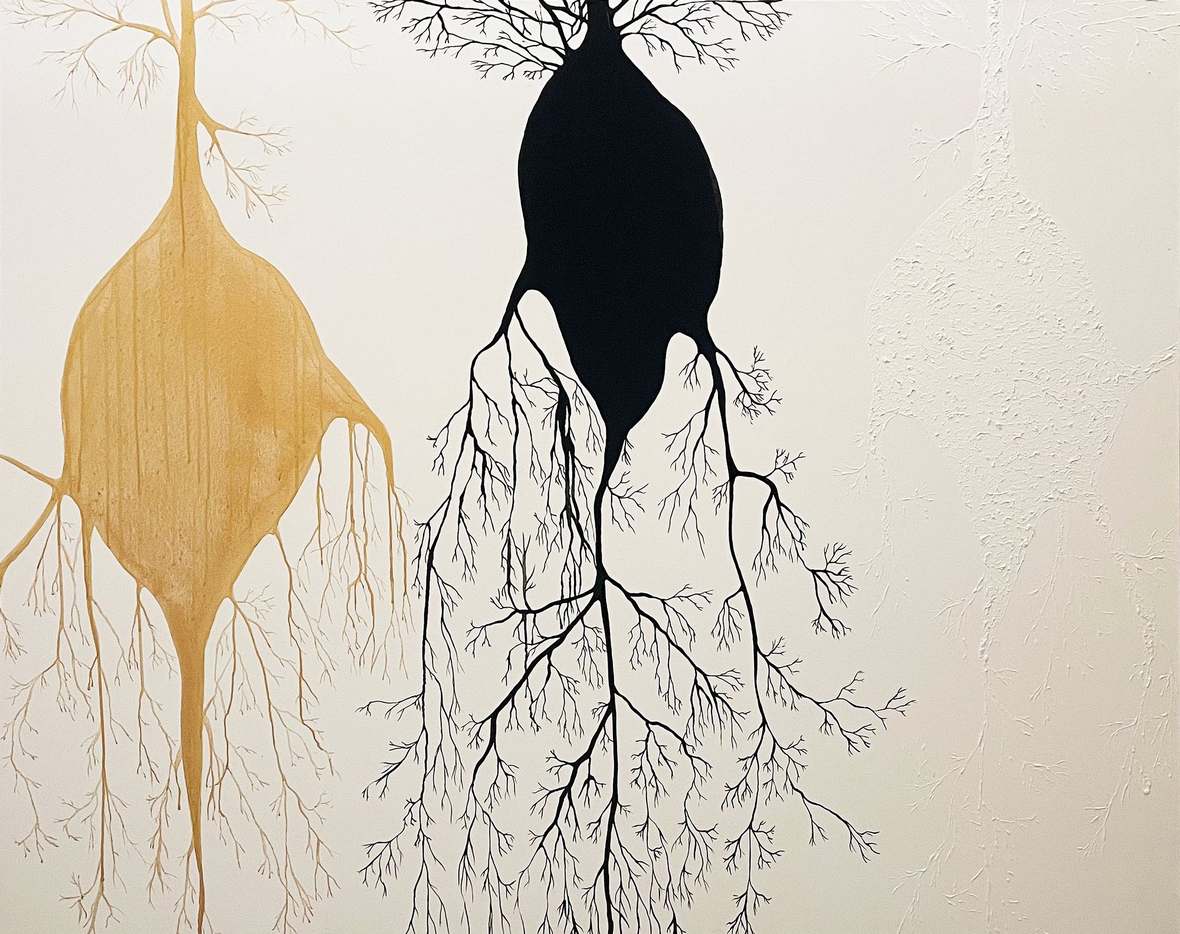
Twenty-five watercolours. One cell each, drawn until the form stopped being a diagram.
Printmaking · Papermaking
Where the drawings became printing matrices, and the paper became part of the image.
Painting & drawing
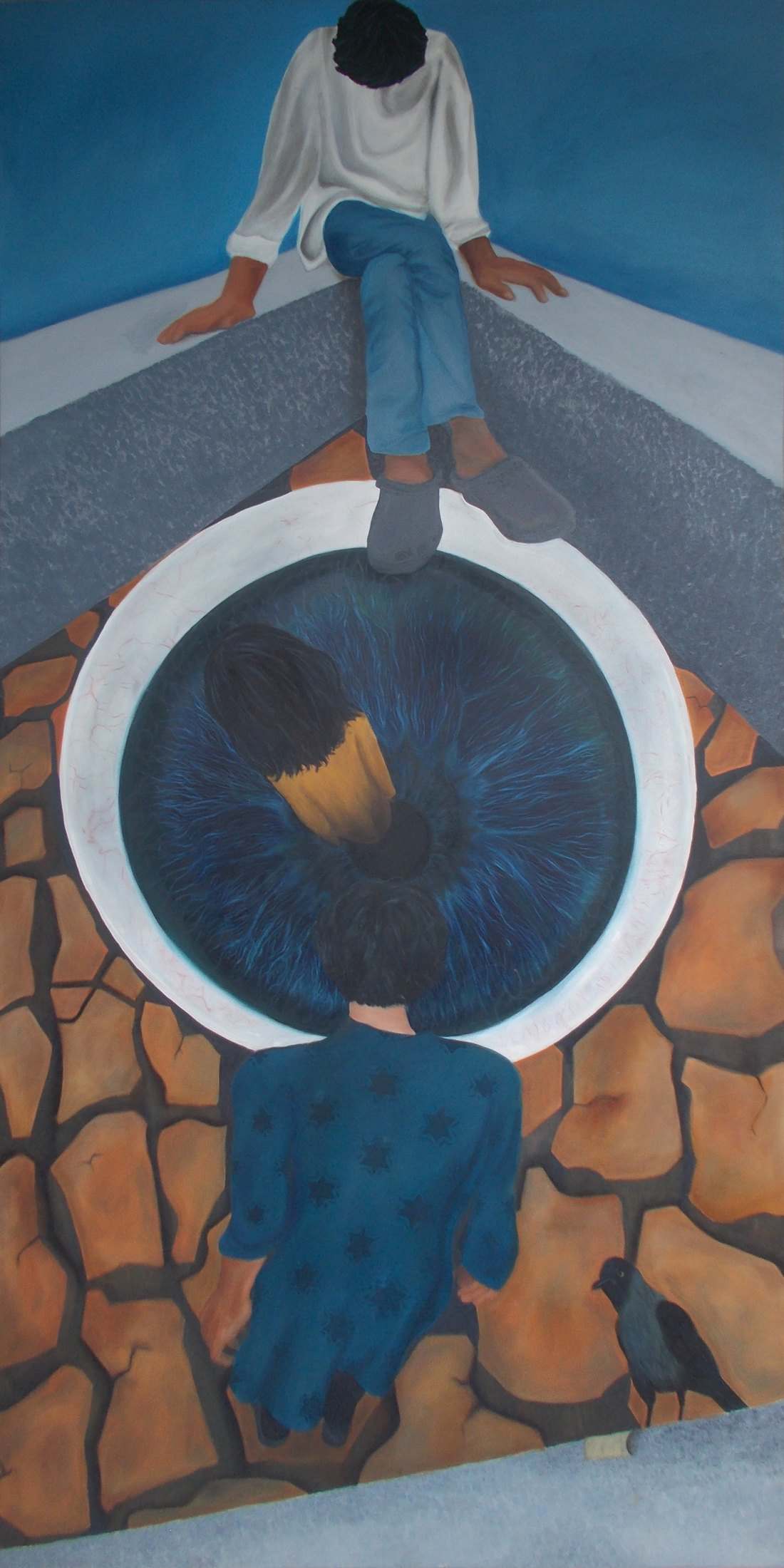
Baroda, before the neurons. Interior spaces that were already about interiority.
6 projects · 2015—2026
Organised by project. Most of it uses several disciplines at once — a chamber is a print, a sculpture and a room at the same time.
6 projects
Try another search or discipline.
Work that sits outside the main projects — earlier series, studio experiments, and the digital and time-based pieces. Full documentation on request.
Watercolour and charcoal on paper
Yellow-Cell, Green-Cell, Cell, Transmutation. Four works — the cellular studies that preceded the neuron series.
Handmade paper, mixed media
Twenty-two works made during the first year of the pandemic — masks, gloves, sanitiser, the objects of that year pulled into paper.
Single- and multi-channel video
Sequence (2-channel), Impulses, Tête-à-tête, Action Potential Mask. Made during the MFA at SMFA and continuing.
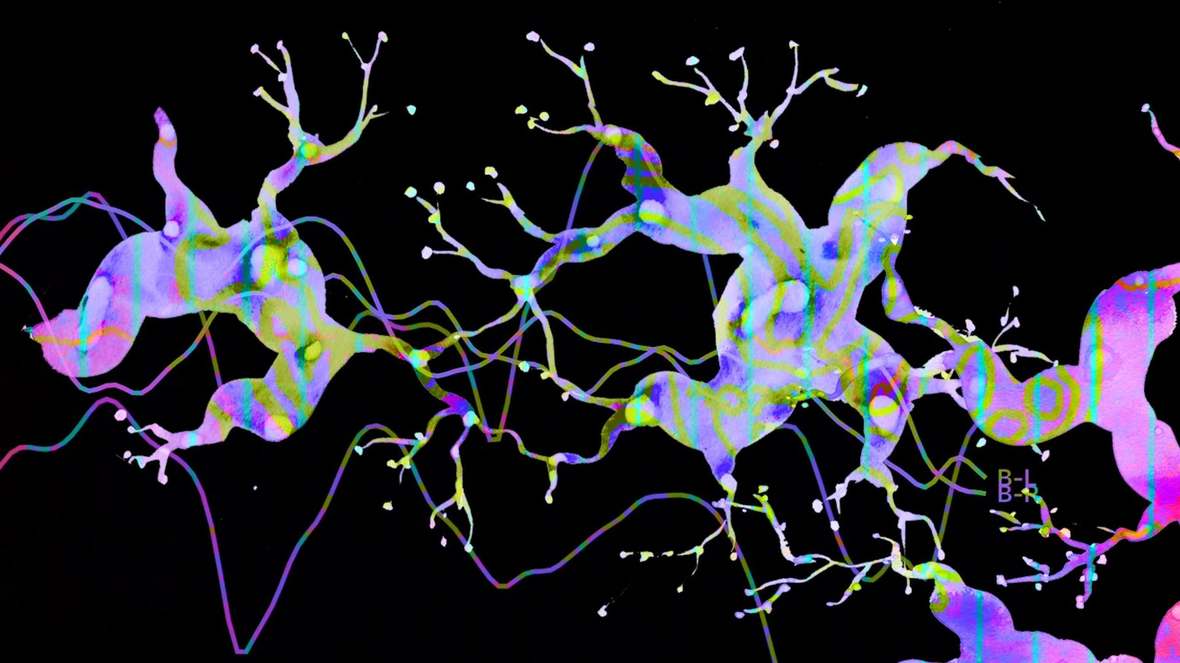
Single-channel video
Catalyst Under-Cover, Nature-pro, Neurons (2020 and 2021), and Dialogue with Pipilotti Rist — 3 min 23 sec, in loop.
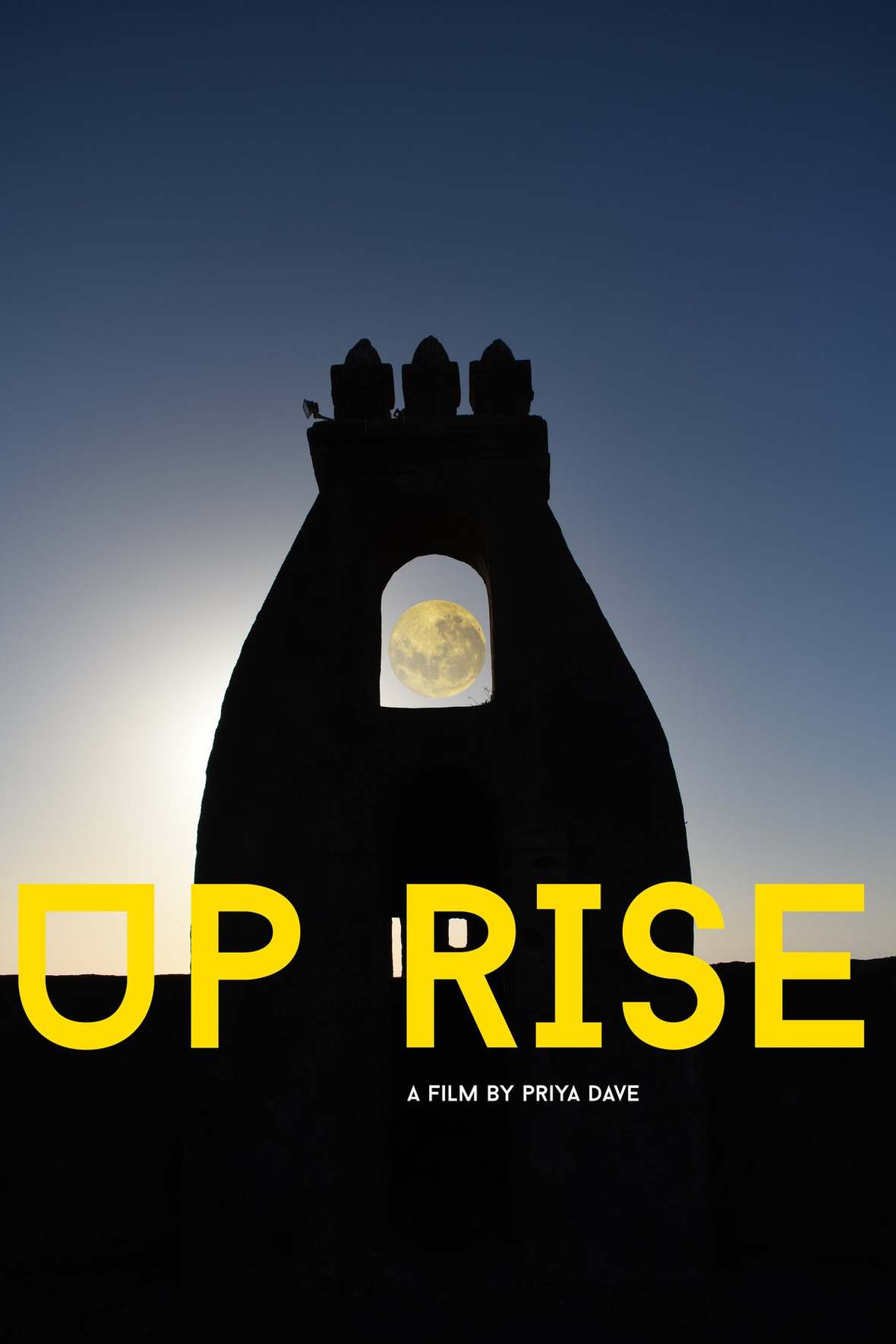
Digital
Poster and image work made alongside the Collective Consciousness period — Uprise, Hope, No Hope, Live.
Digital, 3D
Nine works. Experience, Activated, Experiential I and II, and the Still series — the digital-fabrication thinking that fed Collective Consciousness.
Statement & biography
Statement
I am a multidisciplinary artist working in painting, drawing, printmaking, papermaking, sculpture, video projection and sound, using recycled paper, canvas, tissue and whatever else a particular work needs. What holds it together is one subject I have not finished with: the brain’s physiological architecture, and how a person might be brought inside it rather than shown a picture of it.
That began on paper. Twenty-five watercolour neurons, drawn one cell at a time until the forms stopped resembling textbook diagrams and started behaving like root systems. Those drawings became etching plates and screens; the prints became printed cloth; the cloth became something you could stand under.
Most of what I know about how far a material will go, I learned in a shop with other people in it. Four years of teaching printmaking and papermaking — relief, intaglio, screenprint, monotype, pulp — and the specific knowledge of how much a sheet will take before it tears, or what a screen will hold on organza, arrived while I was explaining it to somebody else. The chambers are made out of that knowledge.
The chambers are the current answer. Four of them, each isolating a single sense, each built at the scale of one body so that entering is the only way to see the work. What you notice inside is your own perception doing its job — which is the closest I can get to showing someone the thing I am actually interested in.
The subject is not neutral. Working with EEG equipment and neurofeedback for Collective Consciousness, made with Flor Delgadillo, made it obvious that brain science has a default body in mind and that it is not everybody’s. Mental health, and who is able to reach care for it, is part of the same question as how perception works.
I make slowly and by hand, and I leave the evidence of that visible — pulp that was never pressed flat, cloth that warped as it dried, stitching that runs through an etching in a second material.
Biography
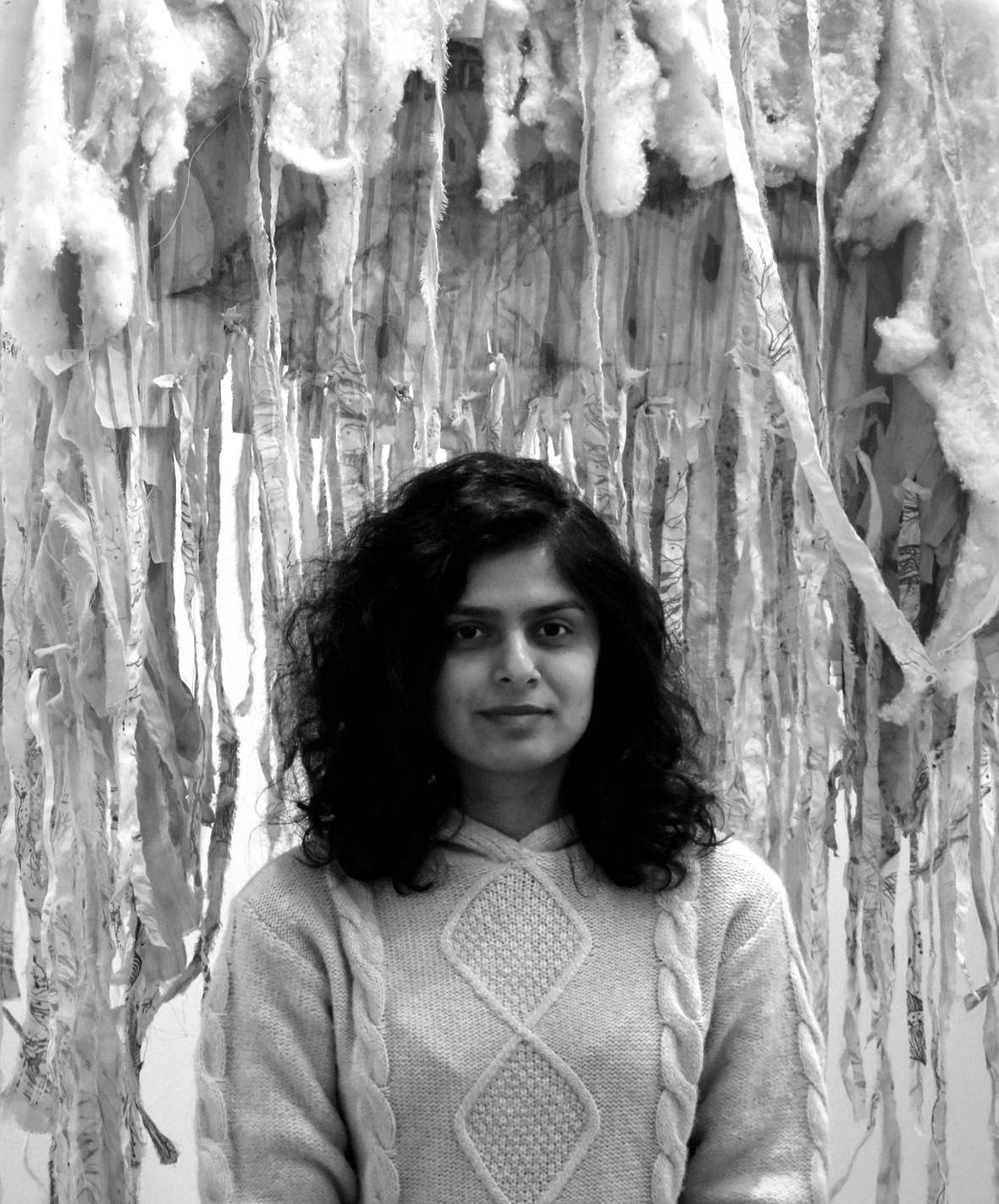
Priya Dave is a multidisciplinary artist who works in painting, drawing, printmaking, papermaking, sculpture, video projection and sound, using materials including recycled paper, canvas and tissue paper depending on the artwork. Through her work she aims to create an environment that maps the brain’s physiological architecture, engages with the public, and helps audiences understand the brain’s creative processes and the importance of mental health as understood through neuroscience. She holds an MFA in Printmaking from the University of Delaware (2025) and an MFA in Painting and Drawing from Tufts University, School of the Museum of Fine Arts, Boston (2022), following a BVA in Painting and Drawing from Maharaja Sayajirao University, Baroda (2017). Her work has been shown at Mechanical Hall Museum, Delaware Contemporary, Tufts University Art Galleries and Pyramid Atlantic Arts Center. She has taught printmaking at the University of Delaware and papermaking at Fort Point Arts Community, and has coordinated residency and exhibition programmes at both. She is based in Atlanta, Georgia.
Curriculum vitae
Multidisciplinary artist · Atlanta, Georgia · davepriyaa@gmail.com
Contact
Everything gets an answer within a week.
← Work · 03 of 06
Collective Consciousness exposes racial injustices in Western medicine, specifically brain and neuroscience research and practice — communicating how neuroscience and health-care access are interconnected with social injustices.
About this work
The installation incorporates sculpture, video, digital fabrication and real medical equipment, including EEG machines and neurofeedback devices, so that a visitor’s own brain activity becomes part of the work.
It was made during the COVID-19 pandemic with the explicit aim of destigmatising mental-health issues affecting communities of colour — at a moment when who could reach care, and who could not, was impossible to ignore.
← Work · 02 of 06
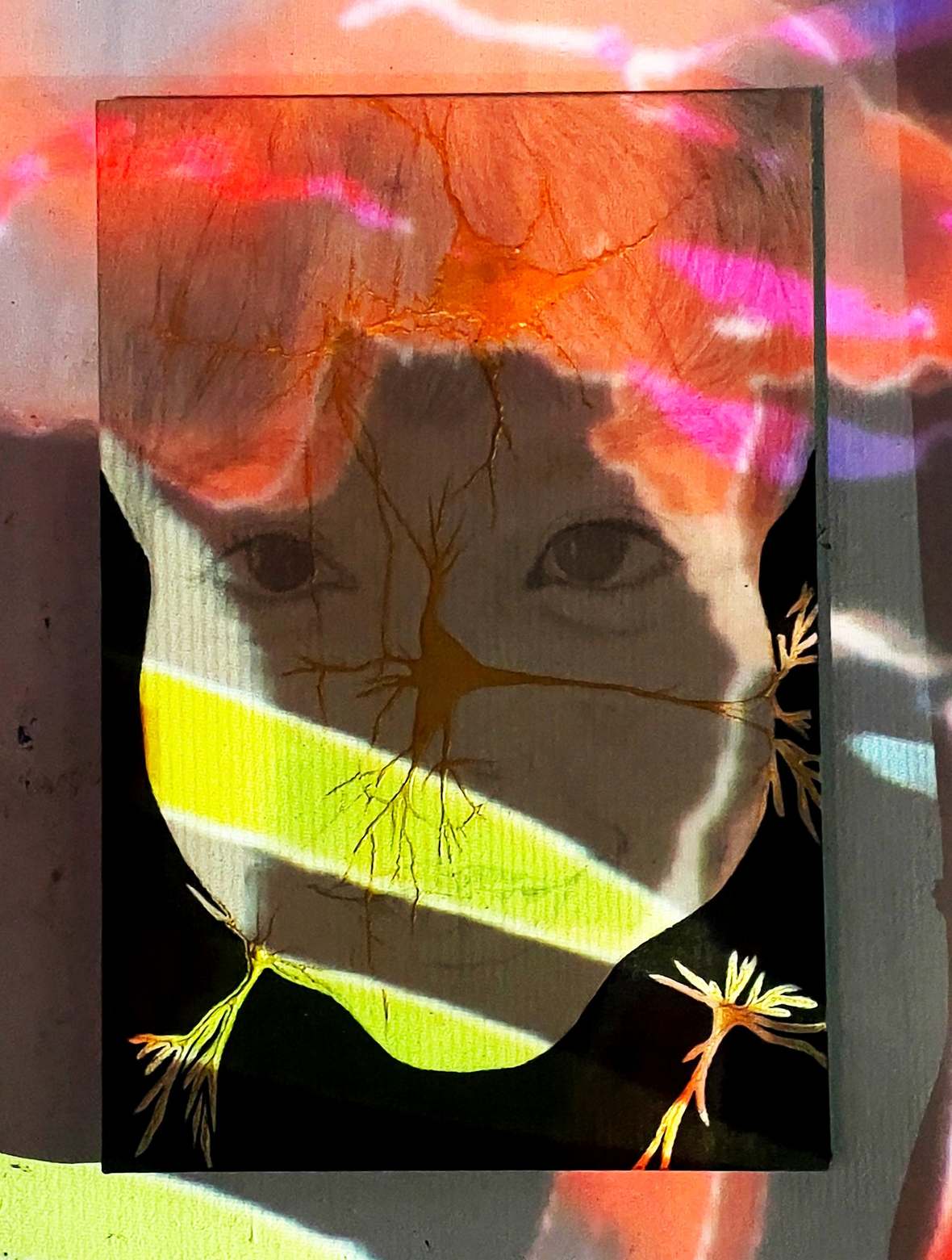
A short body of work made at the end of the SMFA years, where the brain-mapping subject turns outward and starts asking who the research is for.
About this work
Sense Synchronizing sits directly between the neuron drawings and the chambers — it is the first work where synchronising the senses becomes the explicit subject rather than the method.
Anti-racist and Leaf of Hope were made in the same period as Collective Consciousness, and share its question: whose nervous system does medicine take as the default.
University of Delaware, 2024.
← Work · 04 of 06
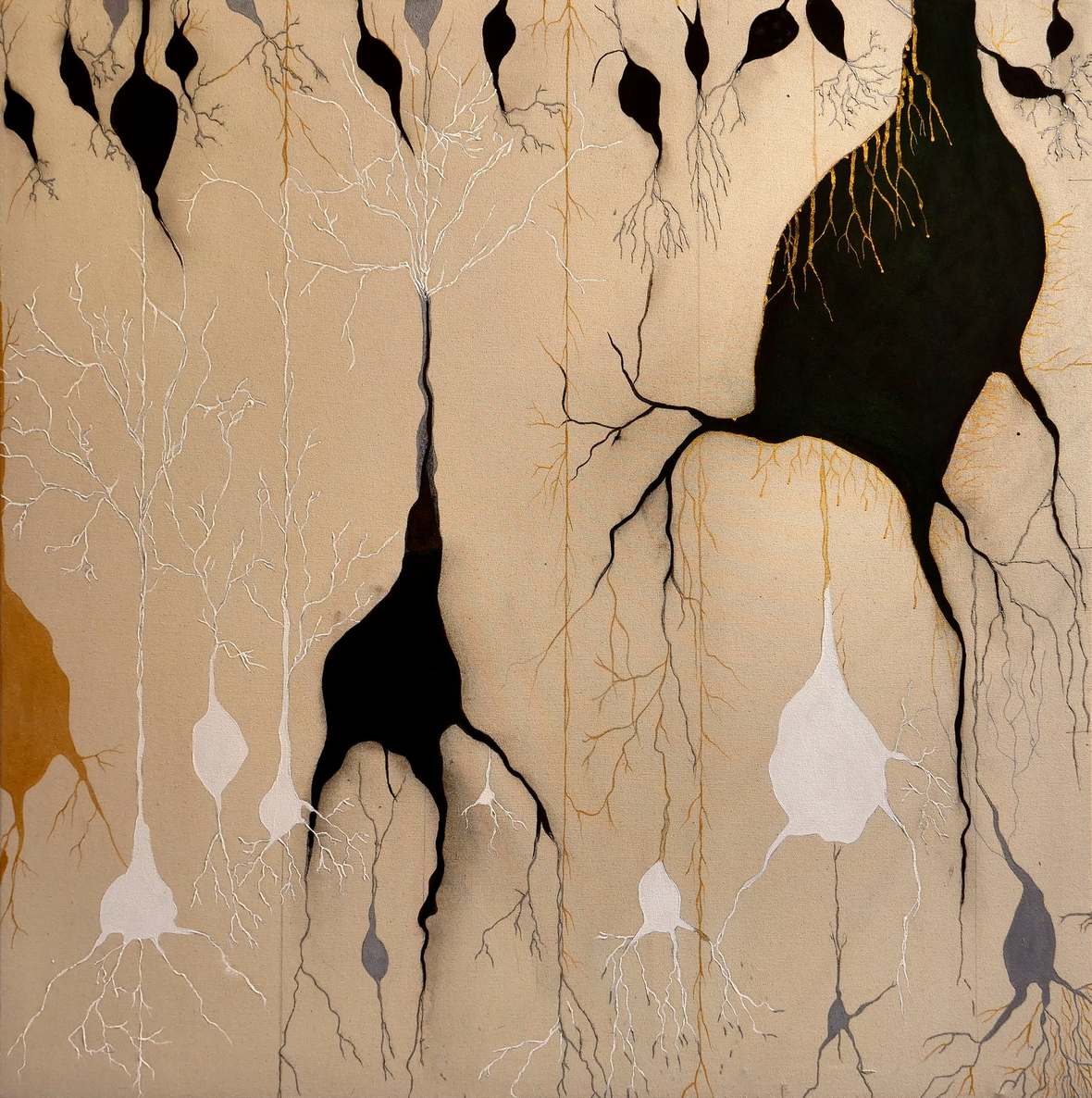
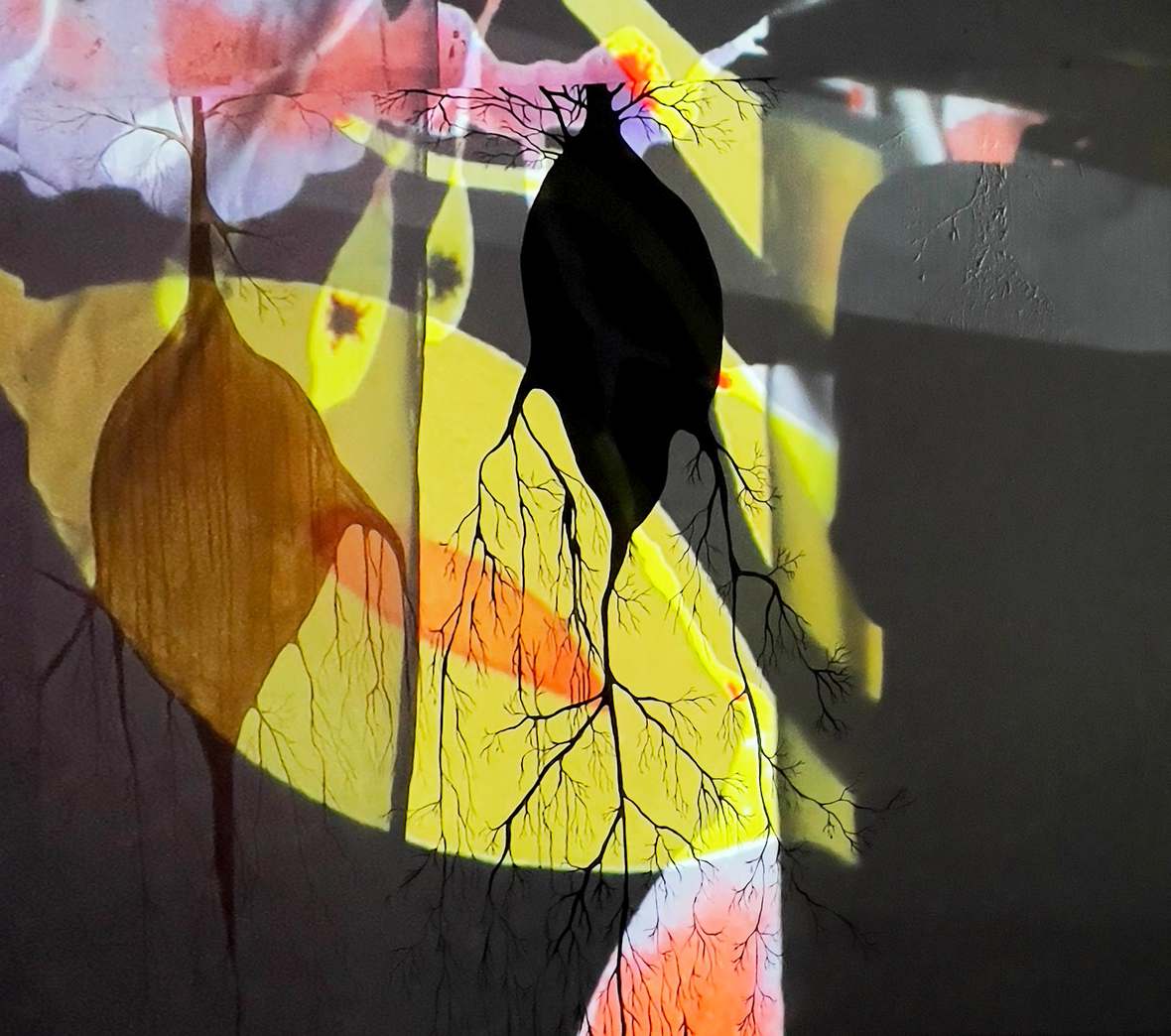
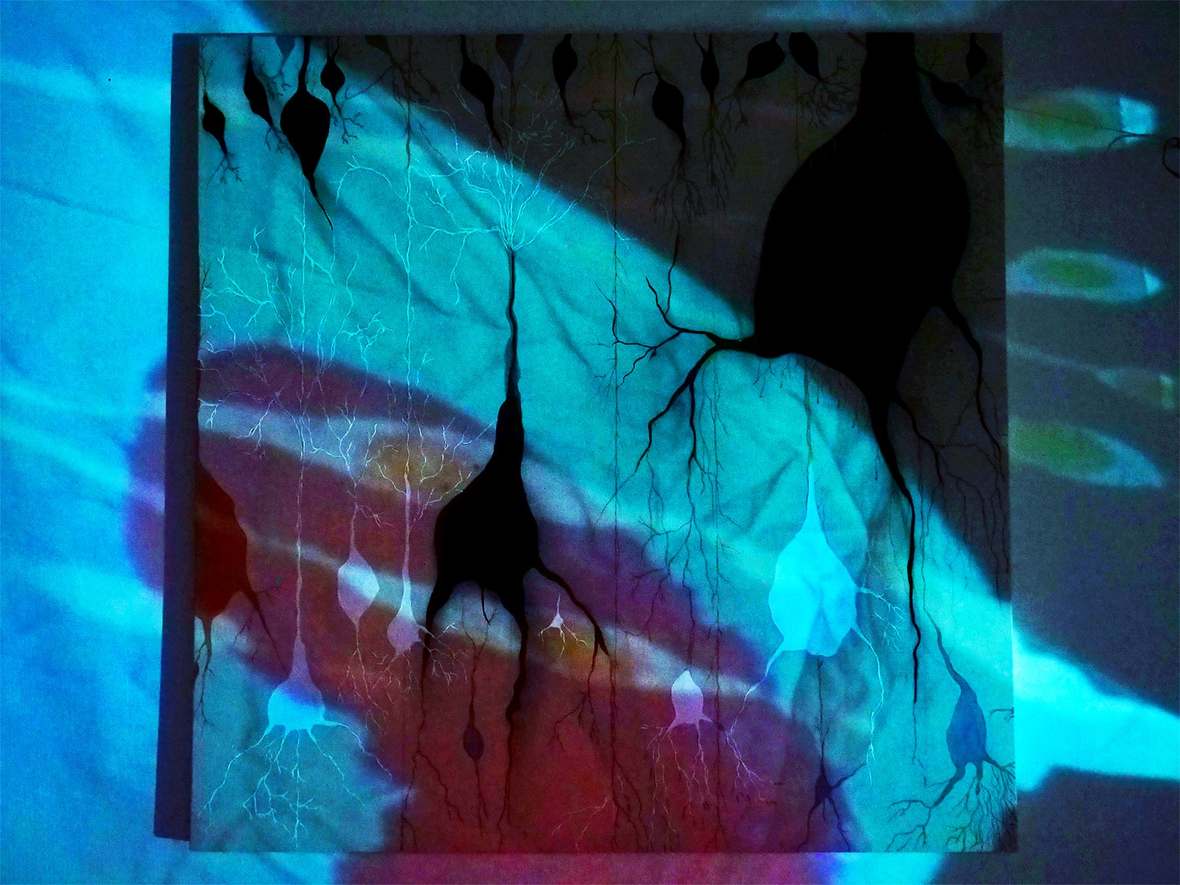
A sustained series of watercolour studies of single neurons, made over two years. They are the vocabulary everything since has been built from.
About this work
Each sheet takes one cell. Drawn from neuroscientific reference and then pushed until the form stops being a diagram and starts behaving like a plant, a river system, a root — which is the point. The brain’s architecture does not look like the schematic we use to teach it.
These forms went on to be cut into etching plates and screens, printed onto cloth, and eventually projected across the installations. Nothing in the later work is invented; it all starts on these sheets.
← Work · 06 of 06
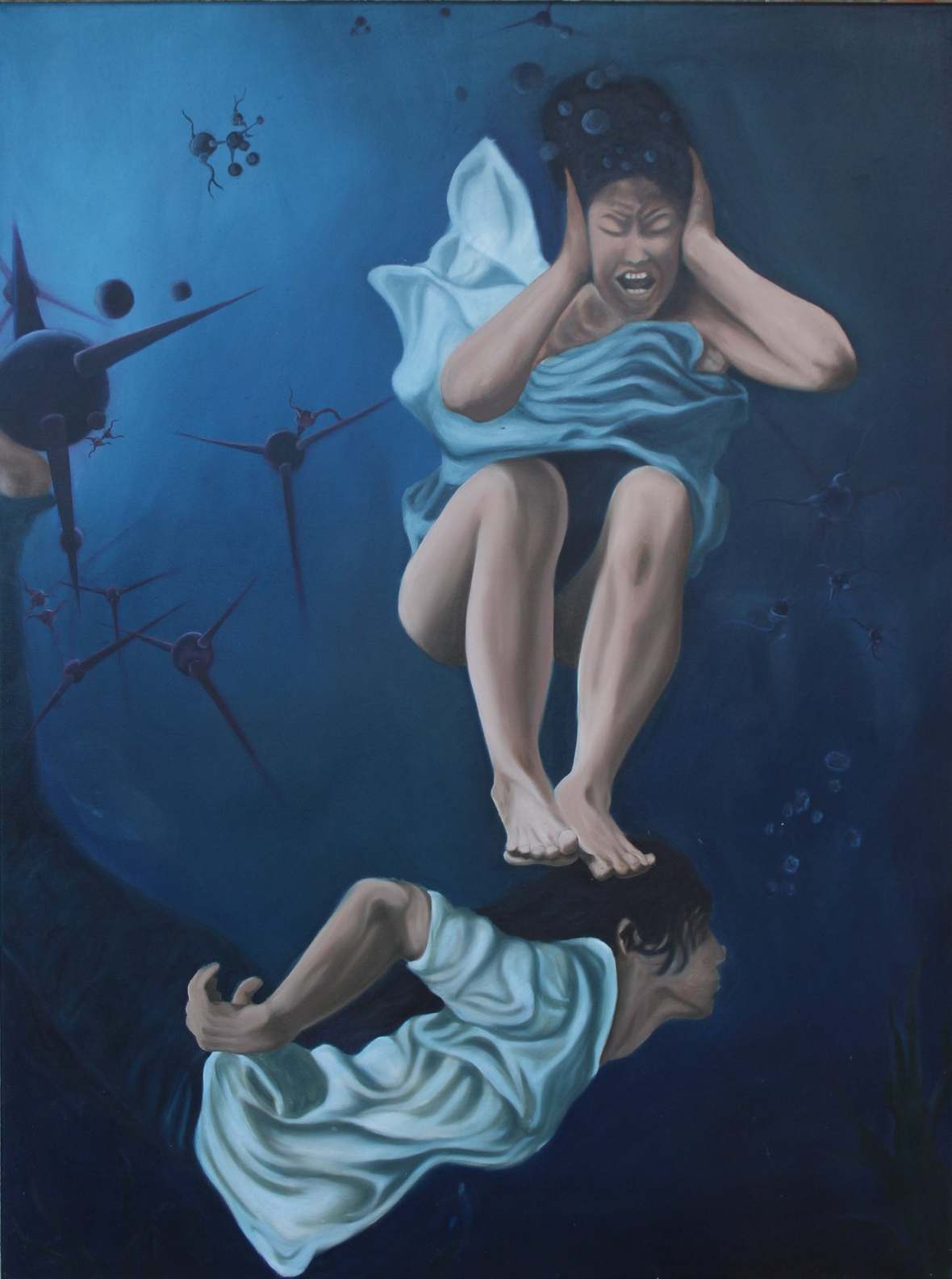
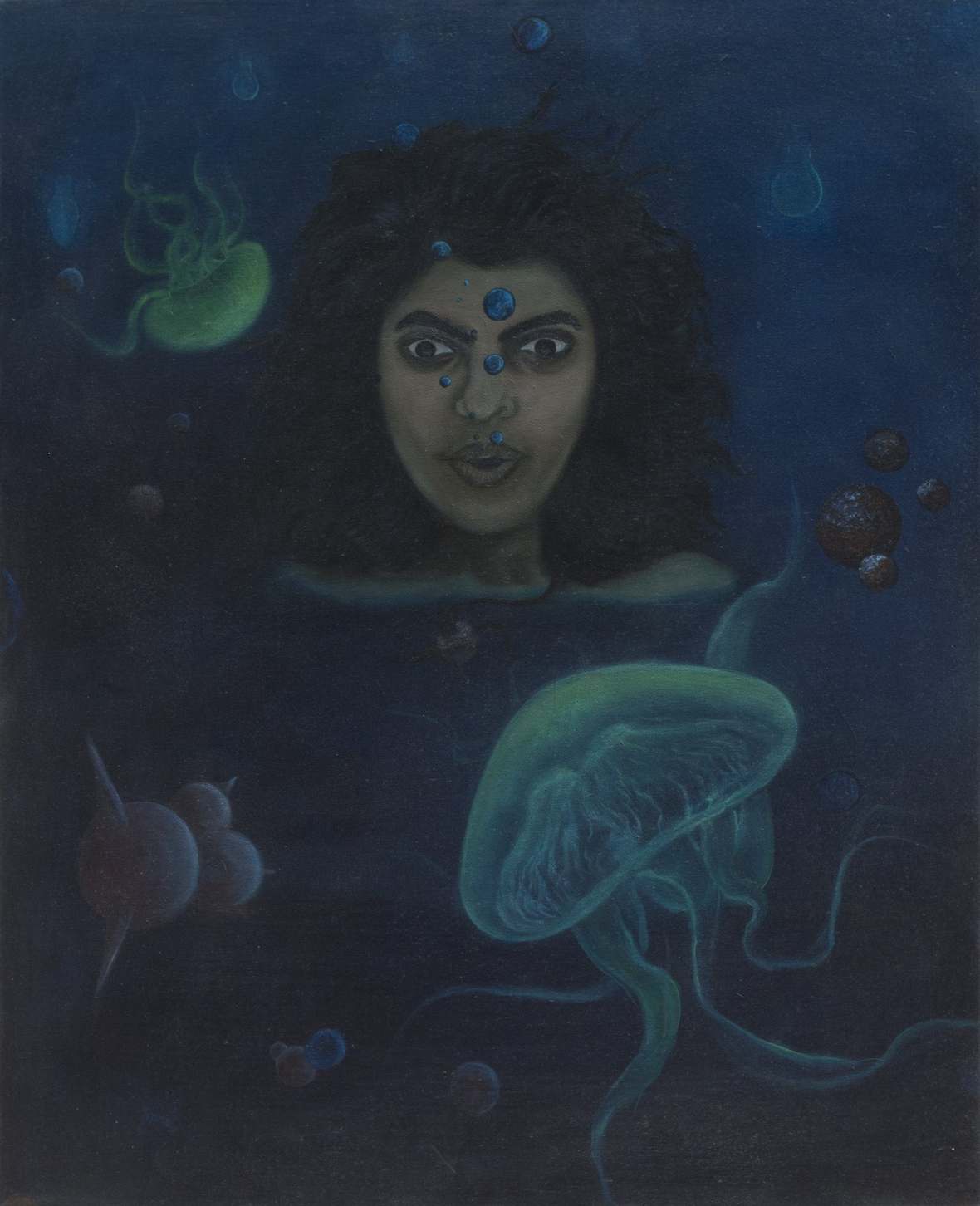
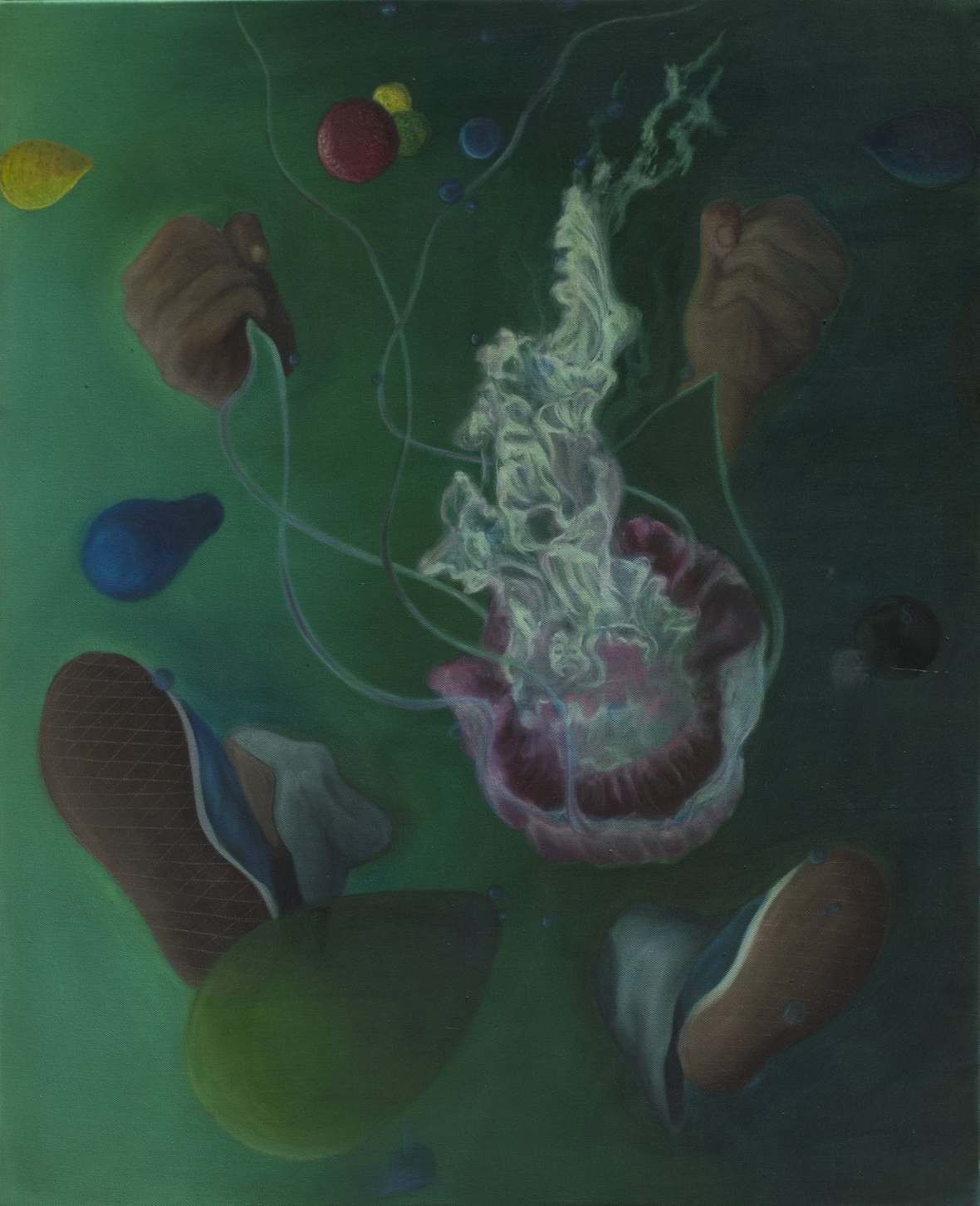
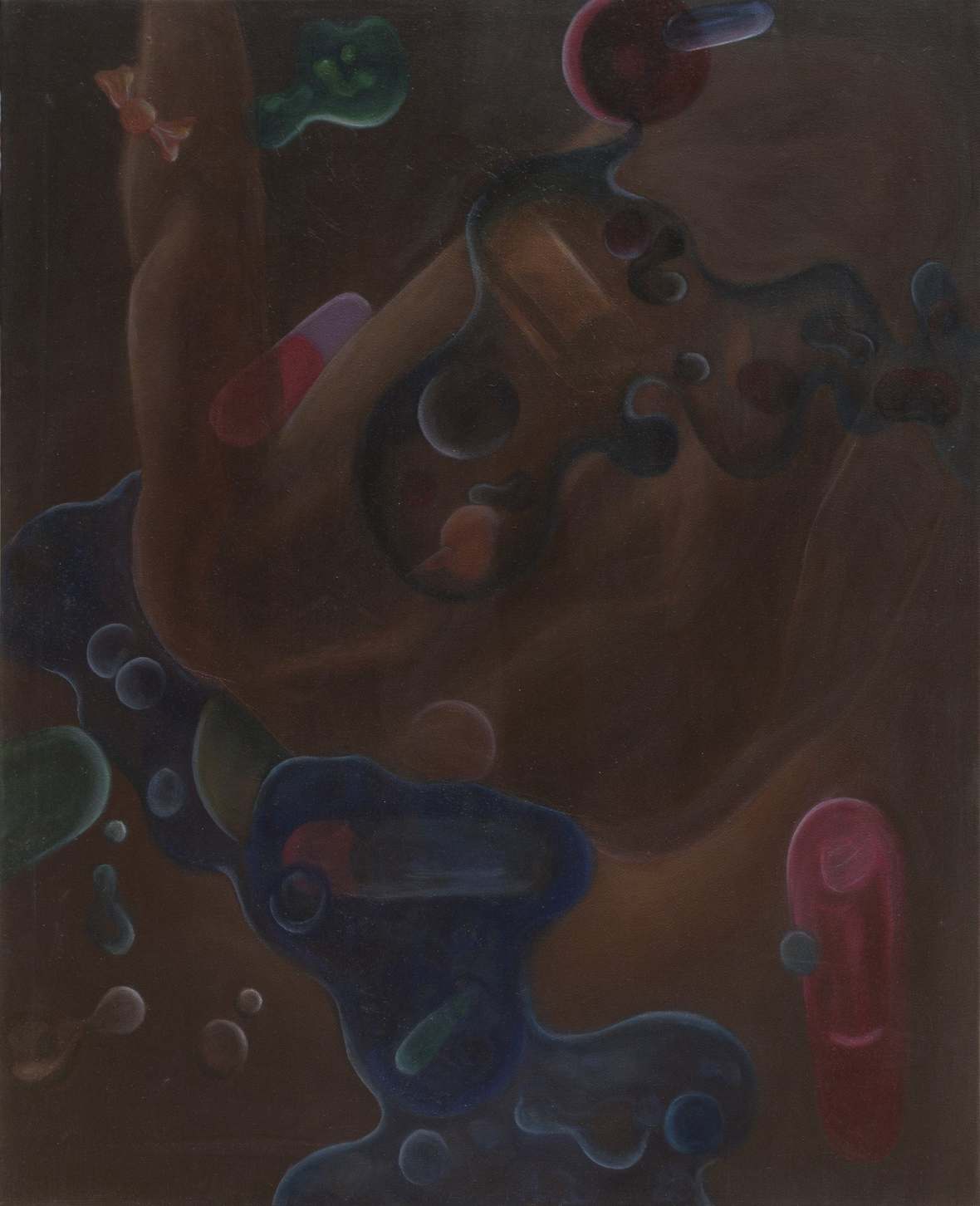
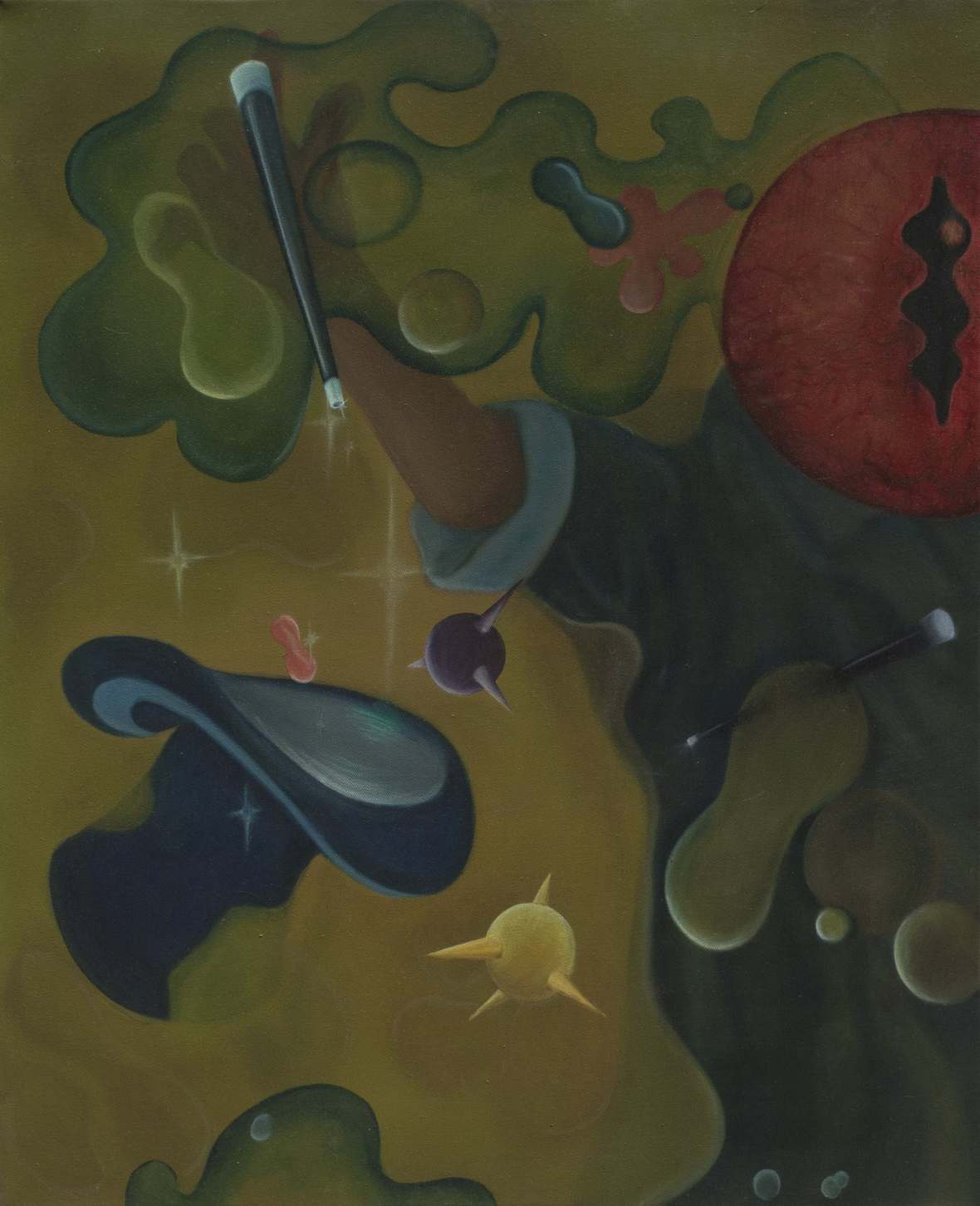
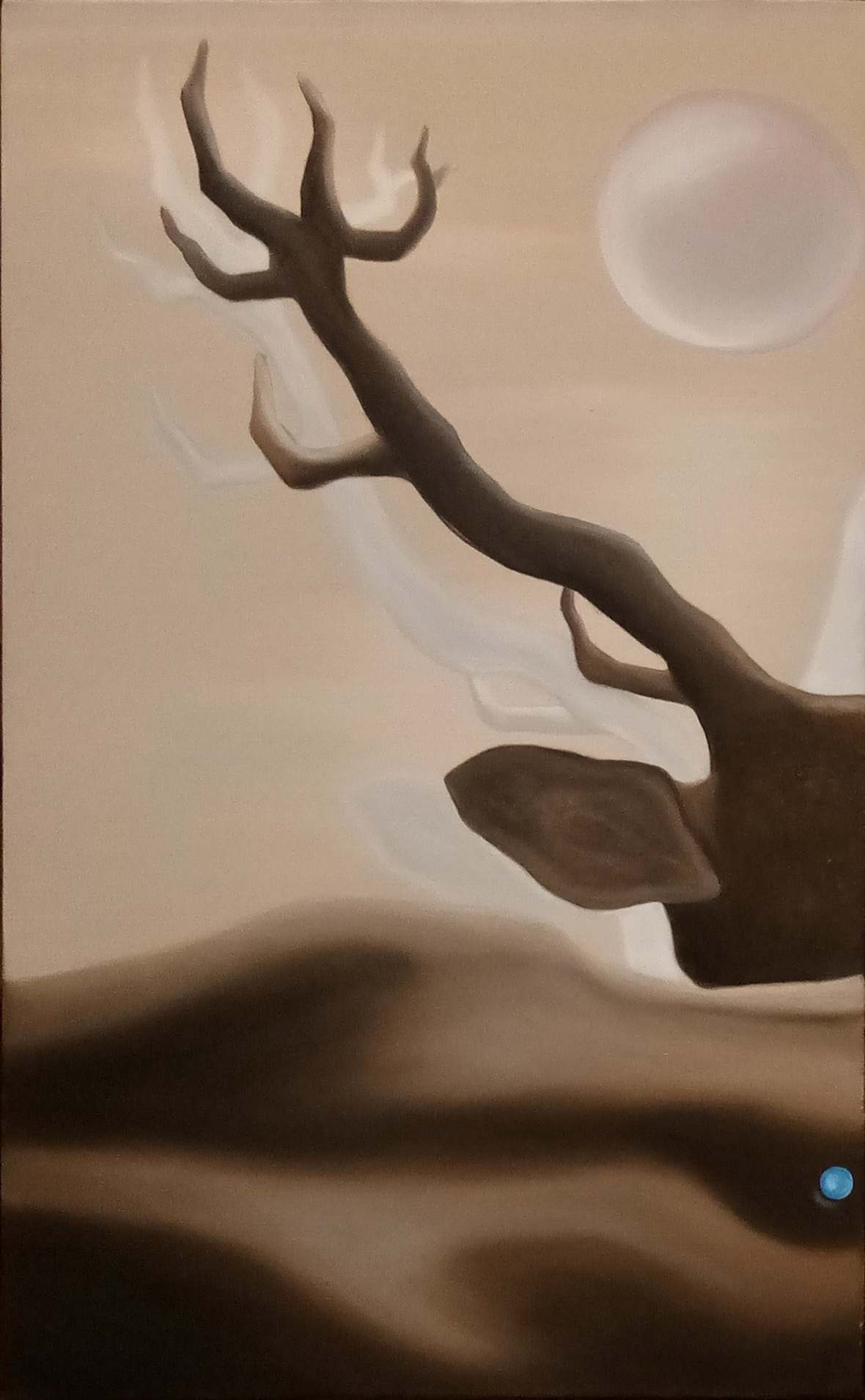
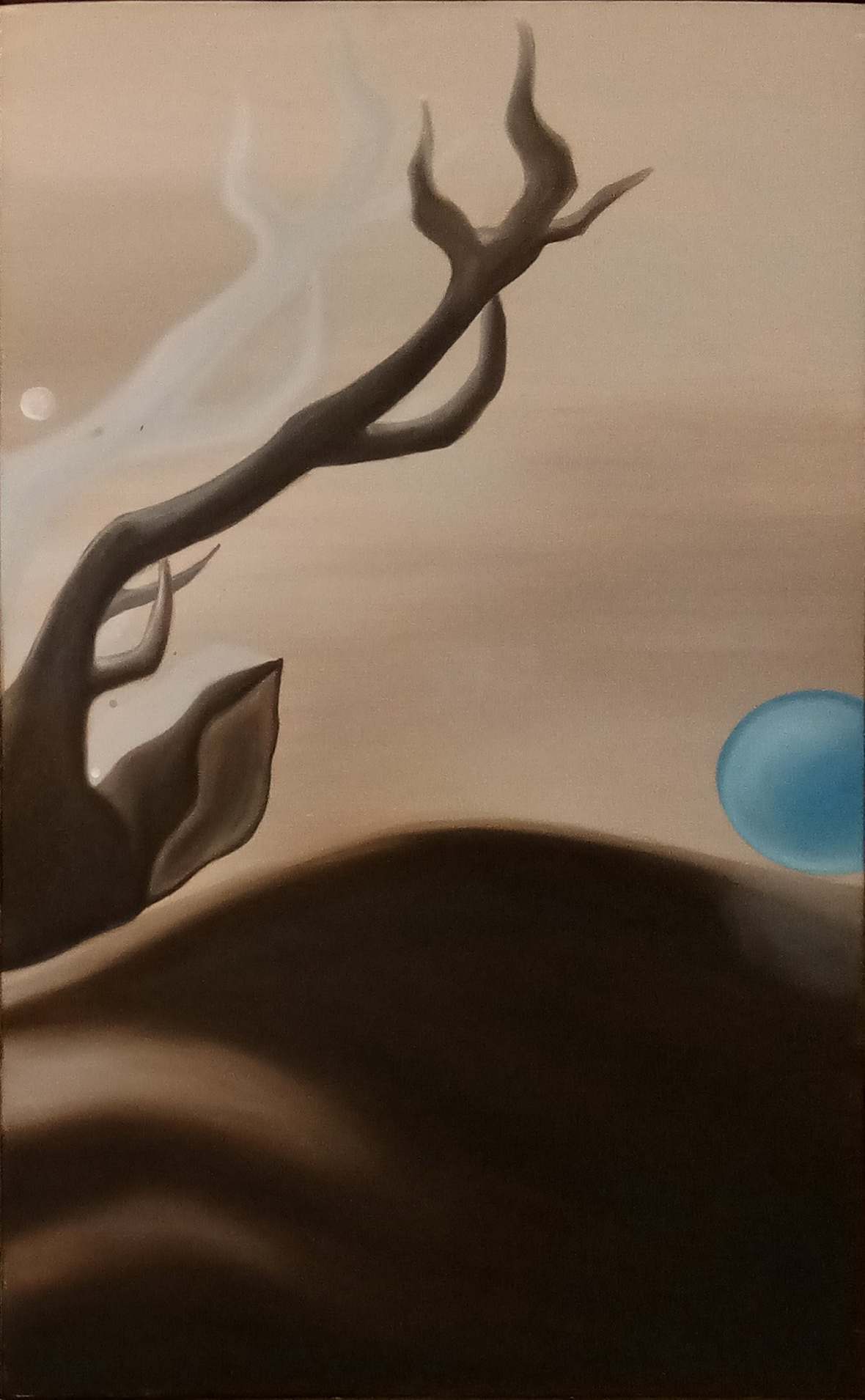
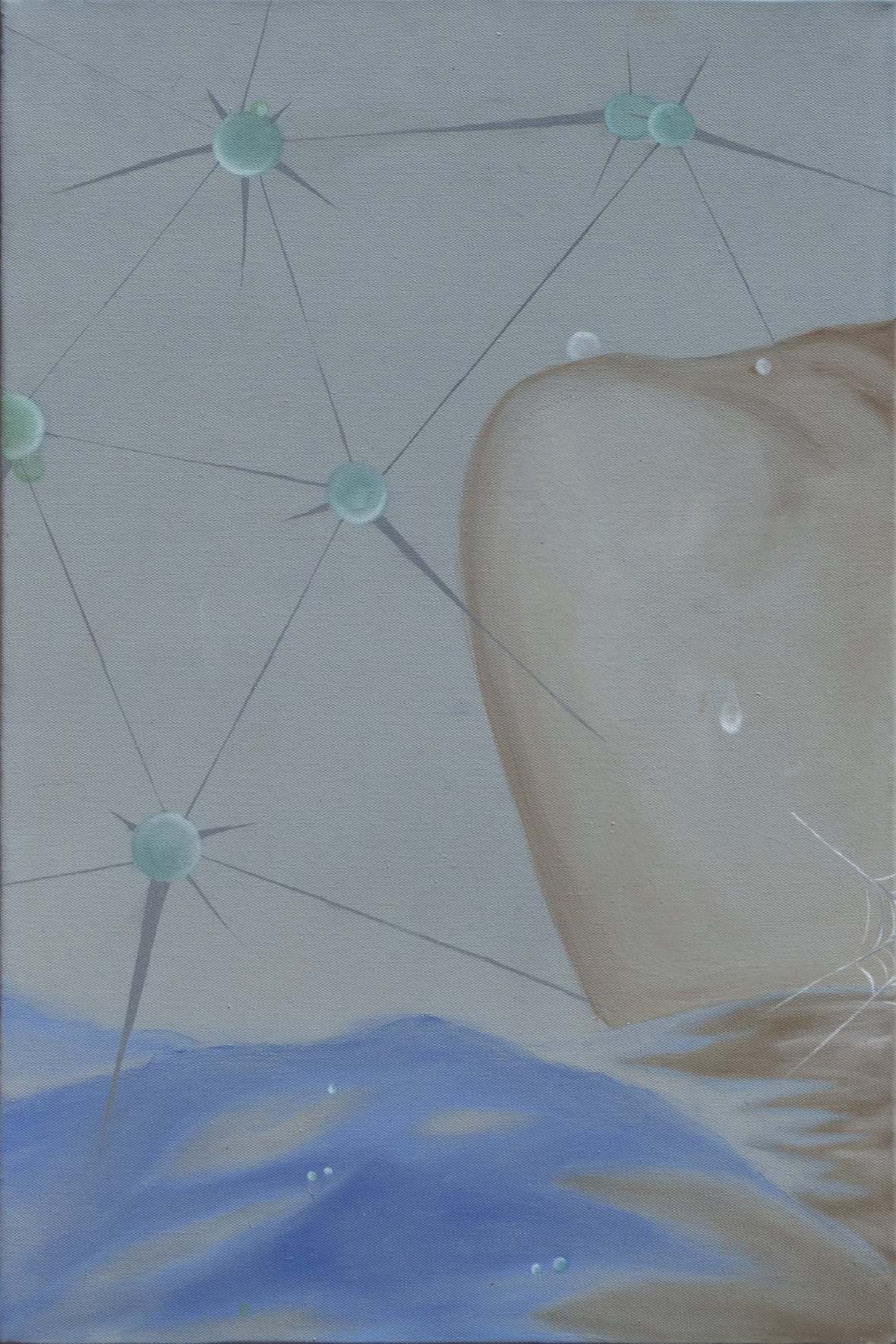
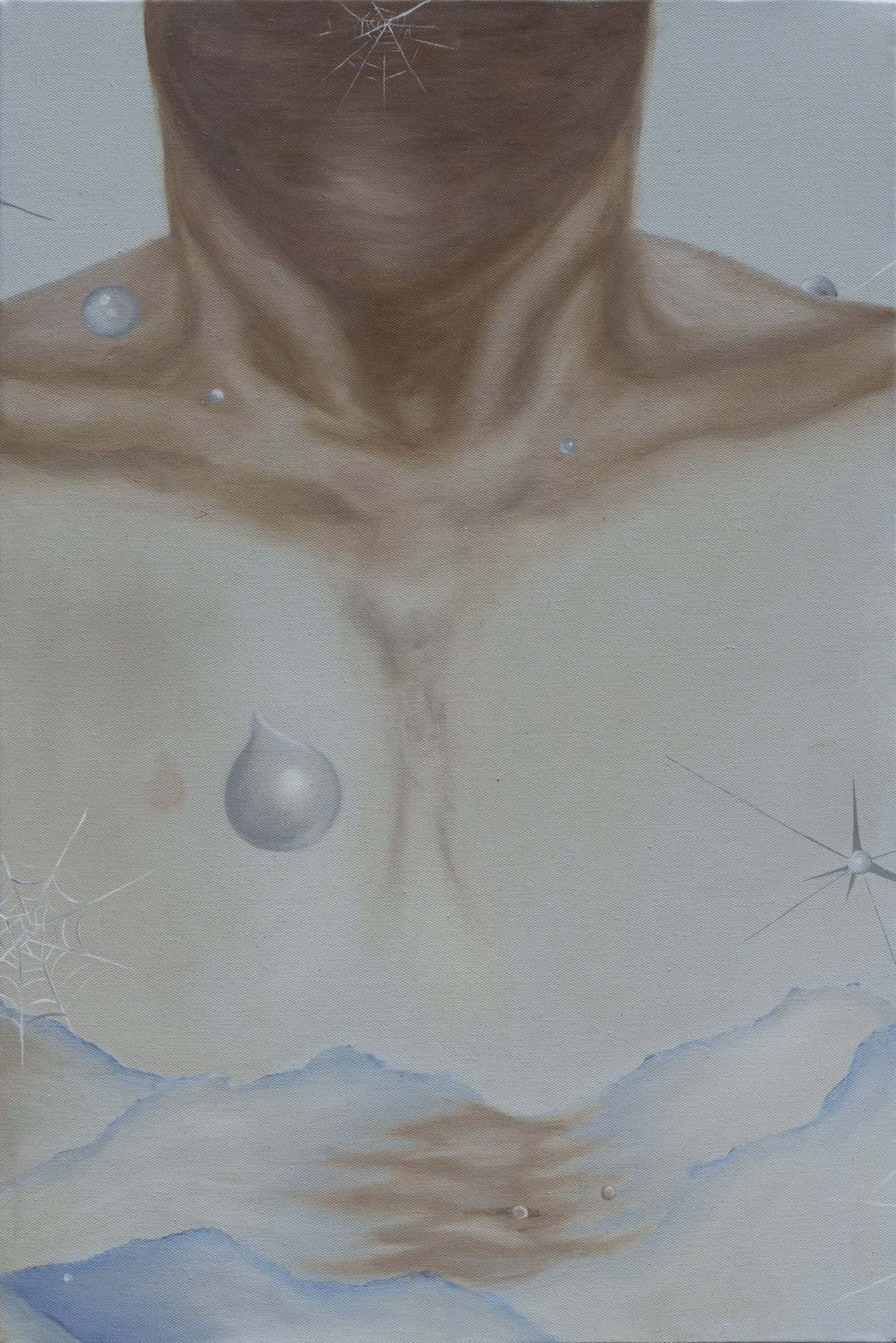
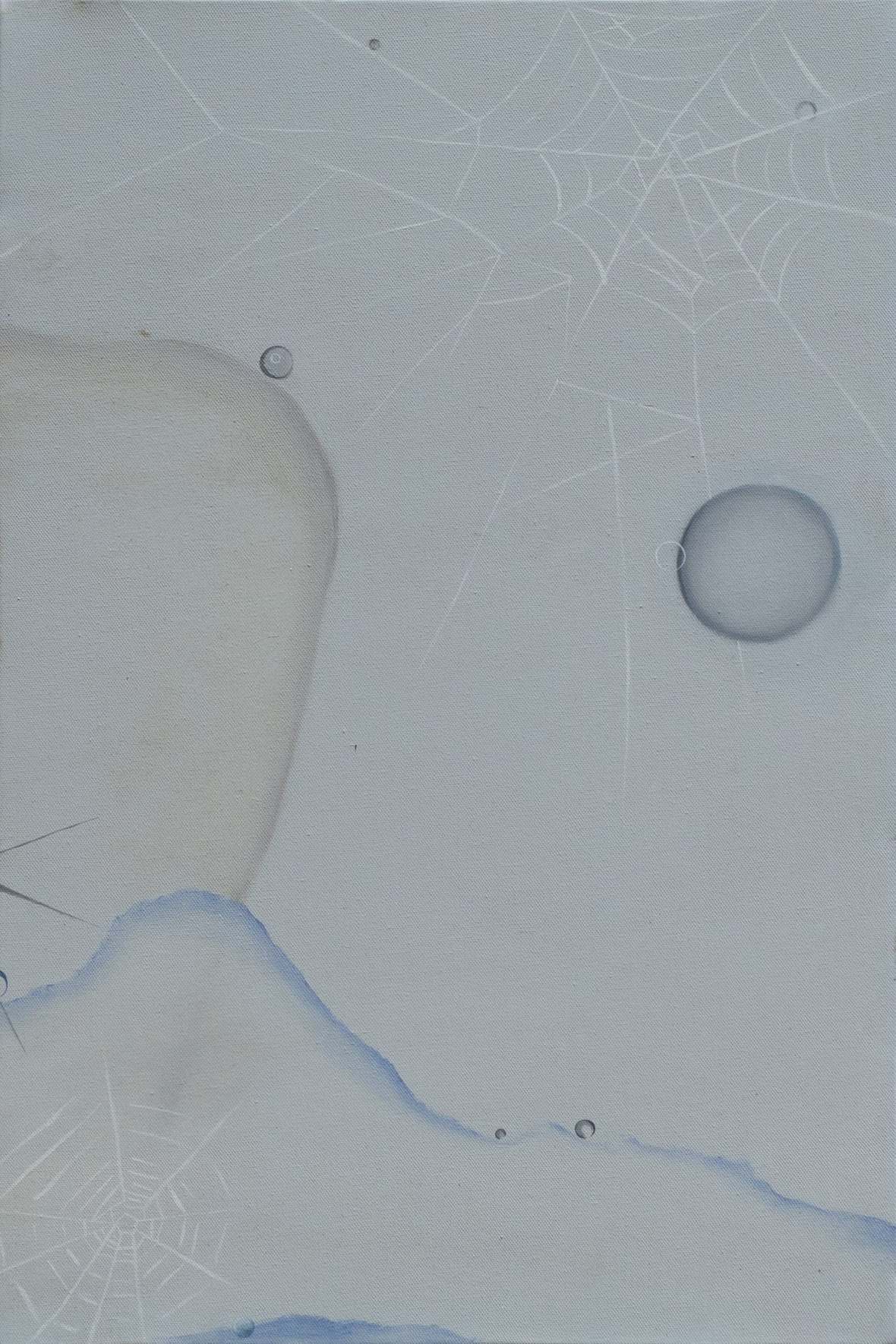
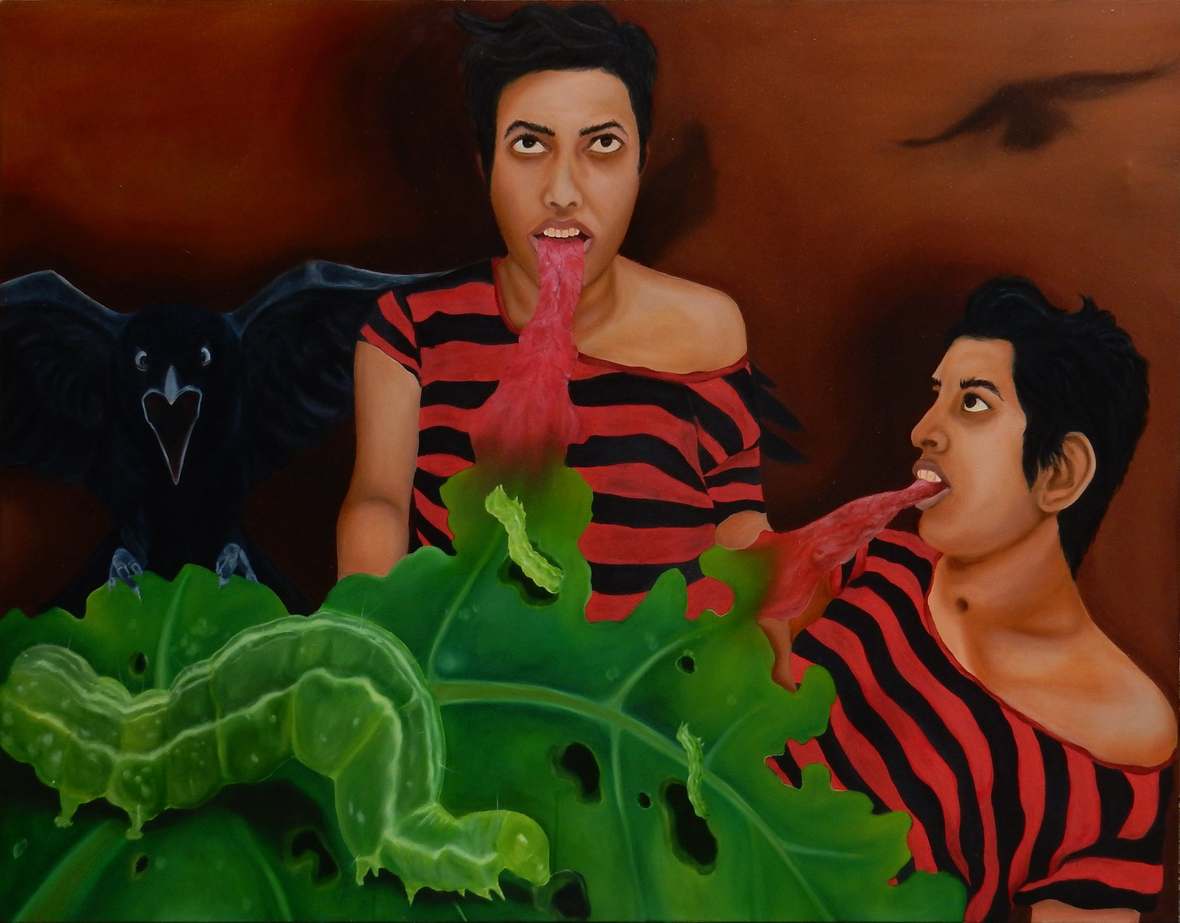
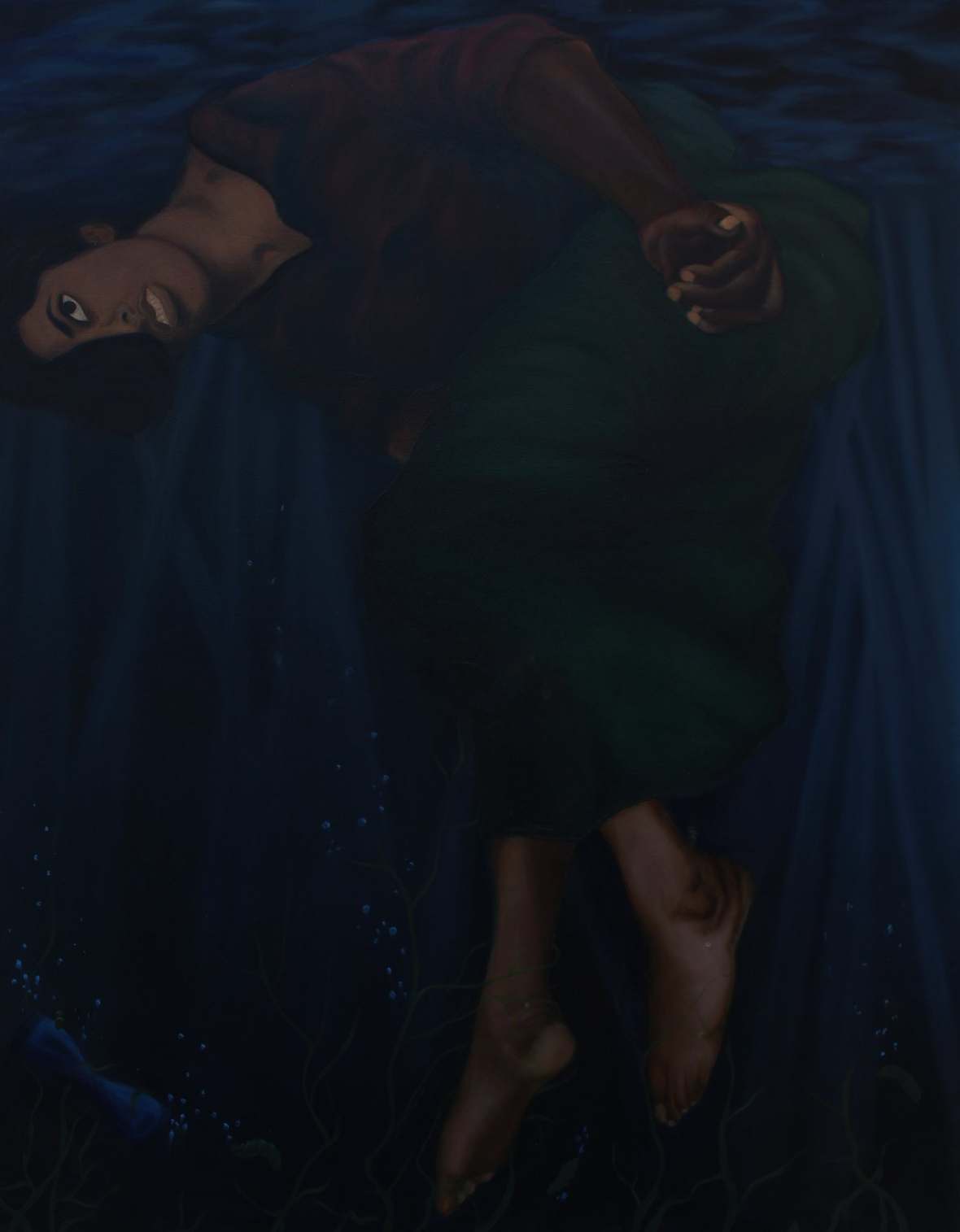
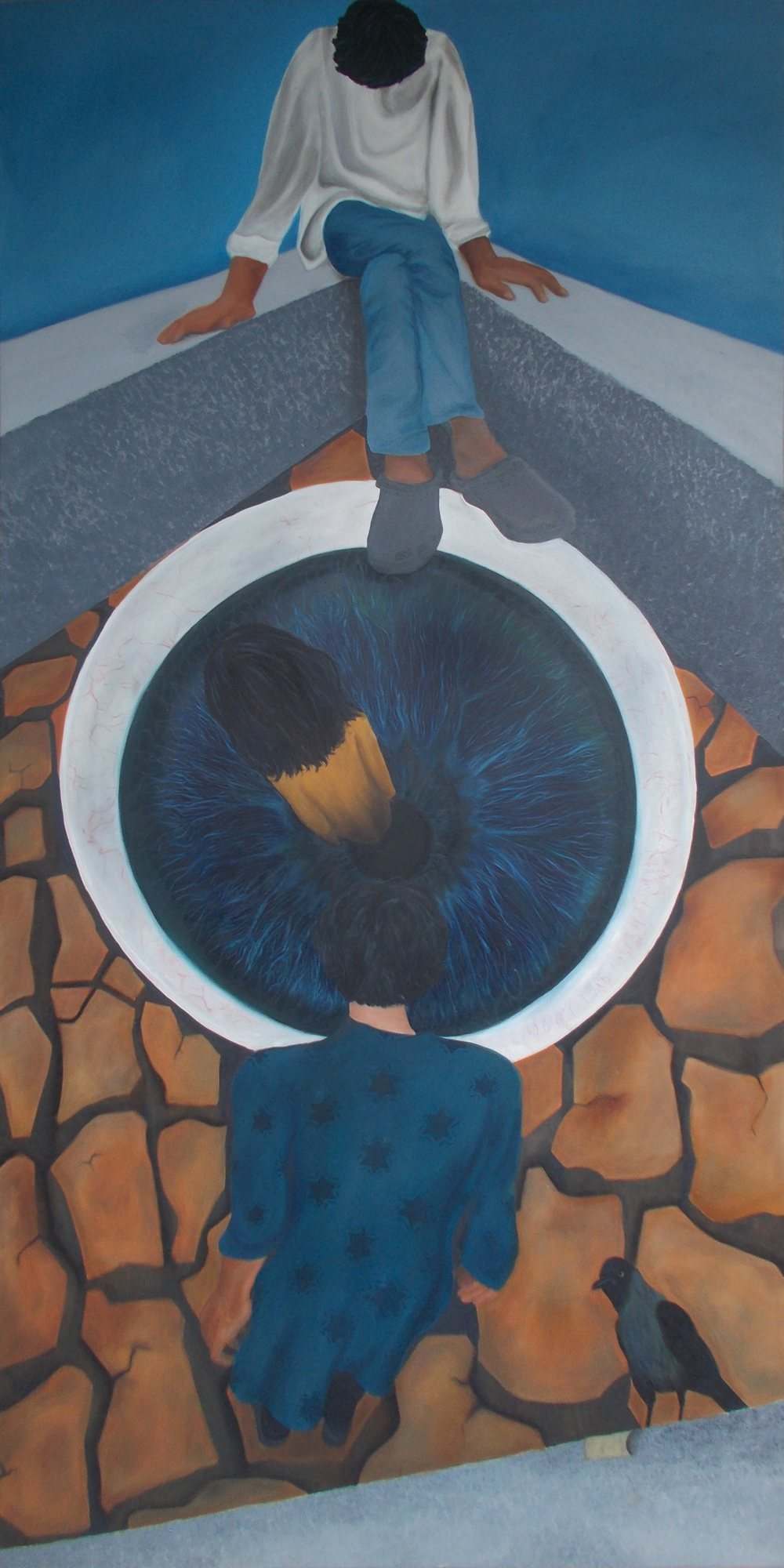
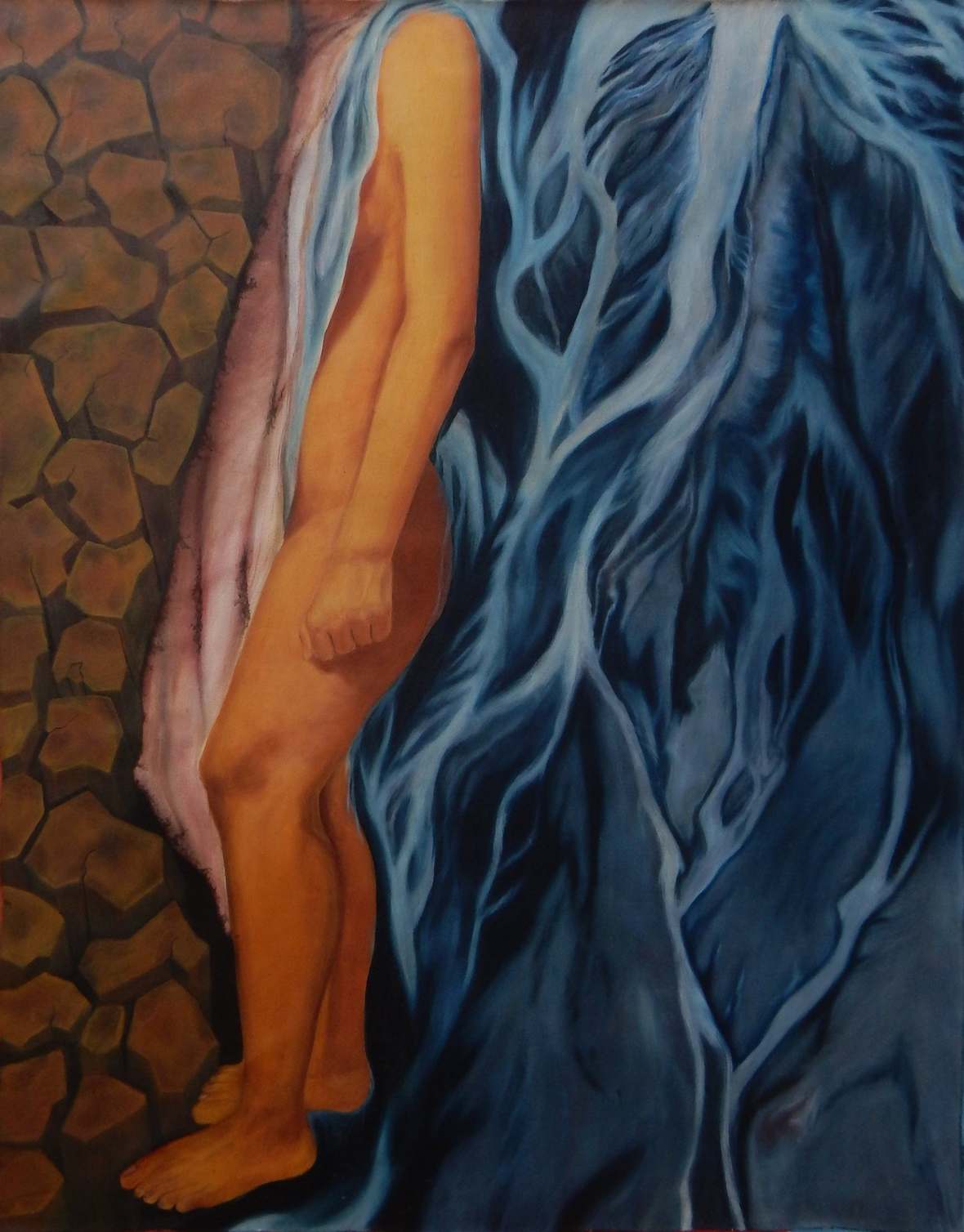
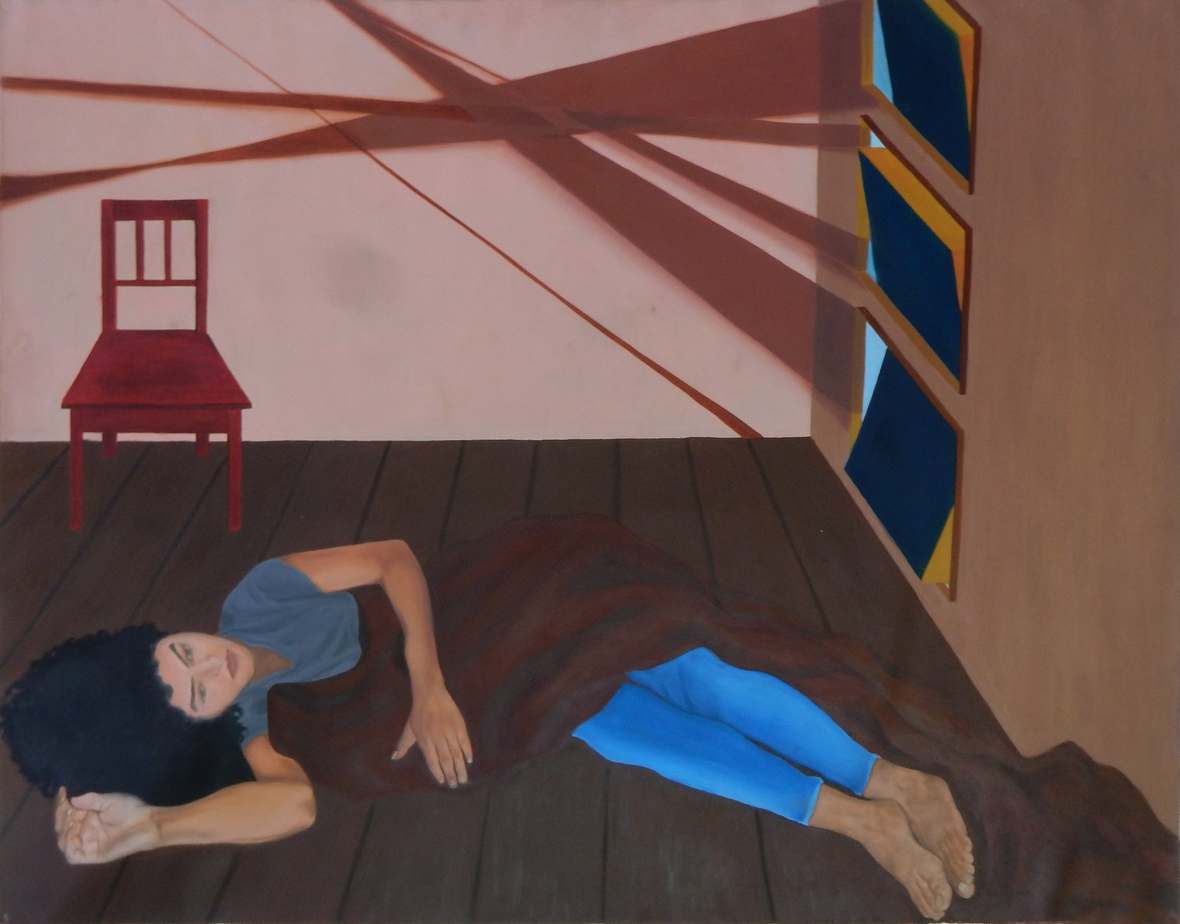
Oil paintings made during and just after the BVA in Baroda. The subject has not arrived yet by name, but the interest in interior space and threshold already has.
About this work
Above and Below is six feet across. Three Windows, Between The Two, Internal Decomposition — the titles do most of the work here: this is painting about being inside something and looking out of it.
The Rare Ataraxy triptych and the Recherche diptych are the first works made in sequence rather than singly, which is how everything since has been made.
← Work · 05 of 06
Three works from 2020 in which the neuron drawings enter the print shop — and the paper stops being a support and becomes material in its own right.
About this work
Tangled Synapse is relief on Kozo, a long-fibred Japanese paper that takes a heavy impression without tearing. Neuroglia is etched onto handmade paper — sheets I pulled myself, so the surface is uneven before a plate ever touches it.
Neuro-stitches goes further: an etching on handmade paper, stitched through with gampi fibres. The stitching is not decoration. It is a second drawing in a second material, passing through the first.
Everything the chambers do with printed textile is anticipated here, at the scale of a sheet.
Looks Good on Paper, National Paper Arts Exhibition, Pyramid Atlantic Arts Center, Hyattsville, MD, 2022.
← Work · 01 of 06
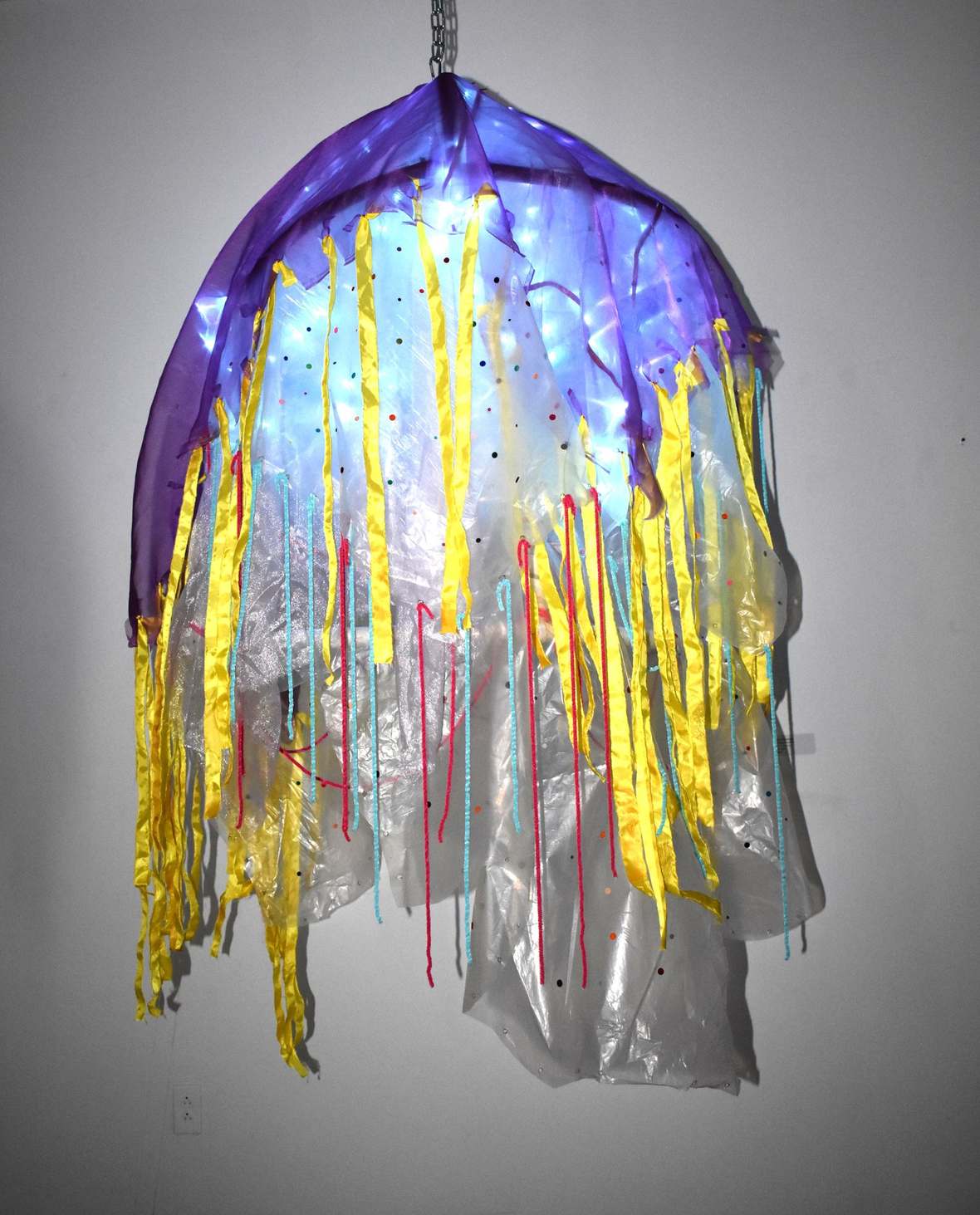
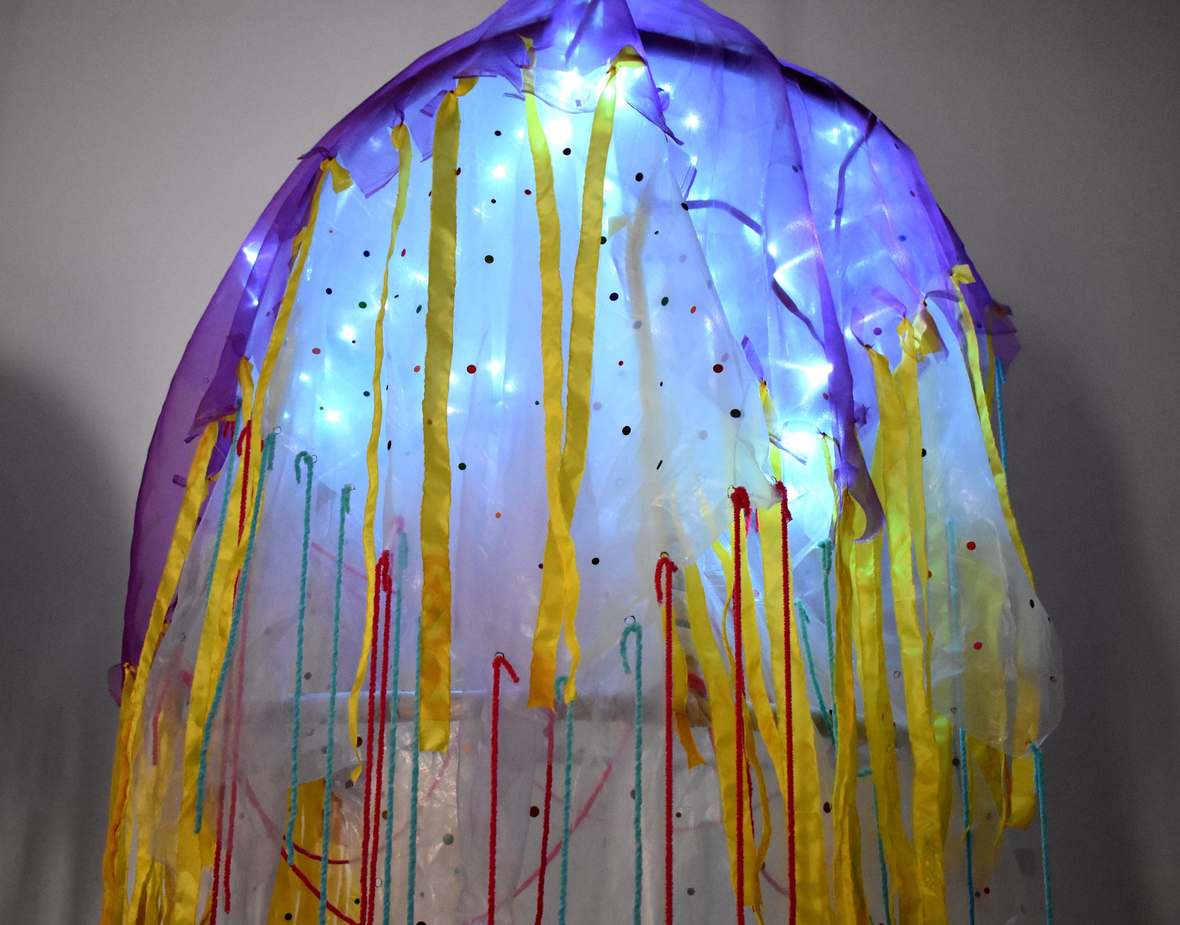
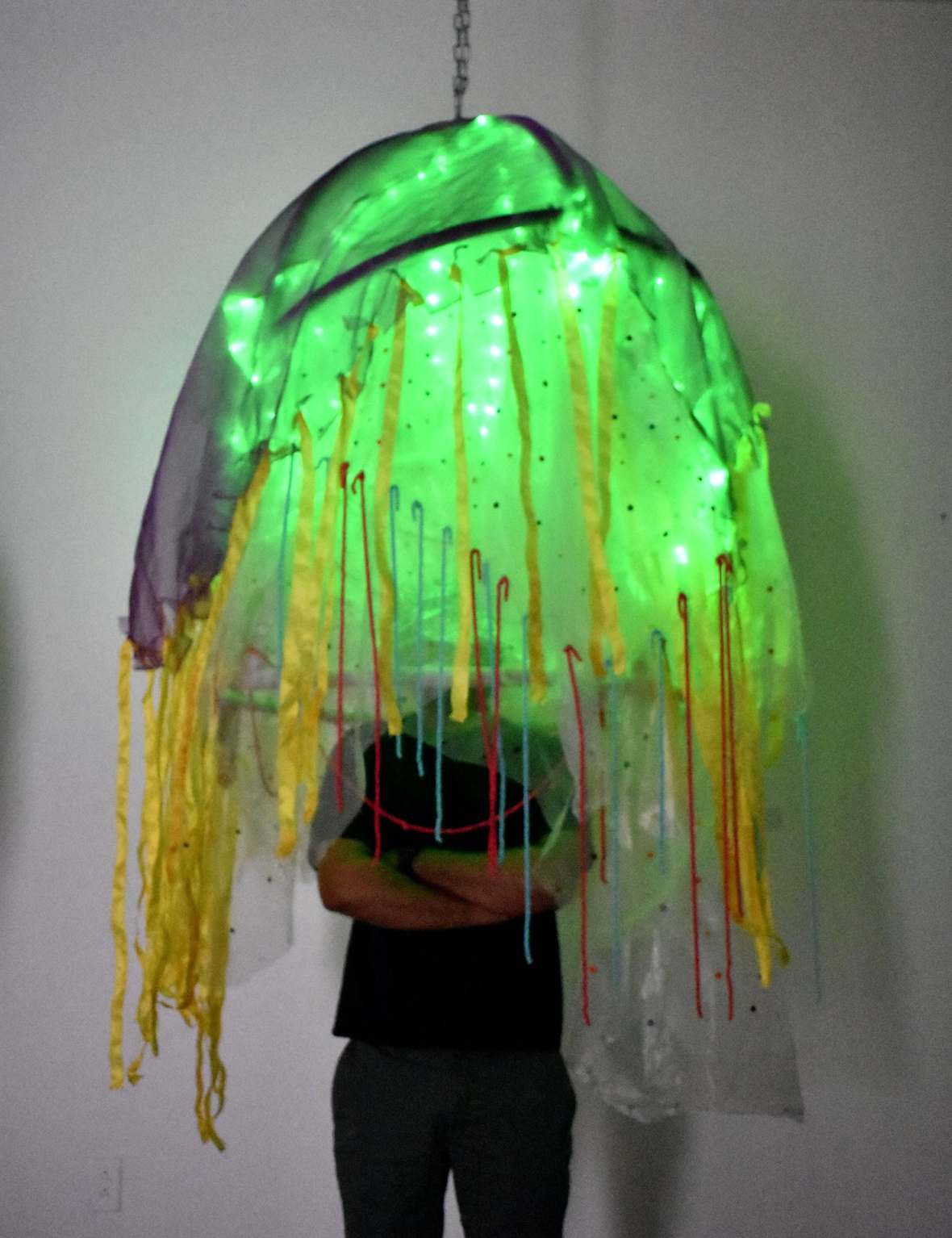
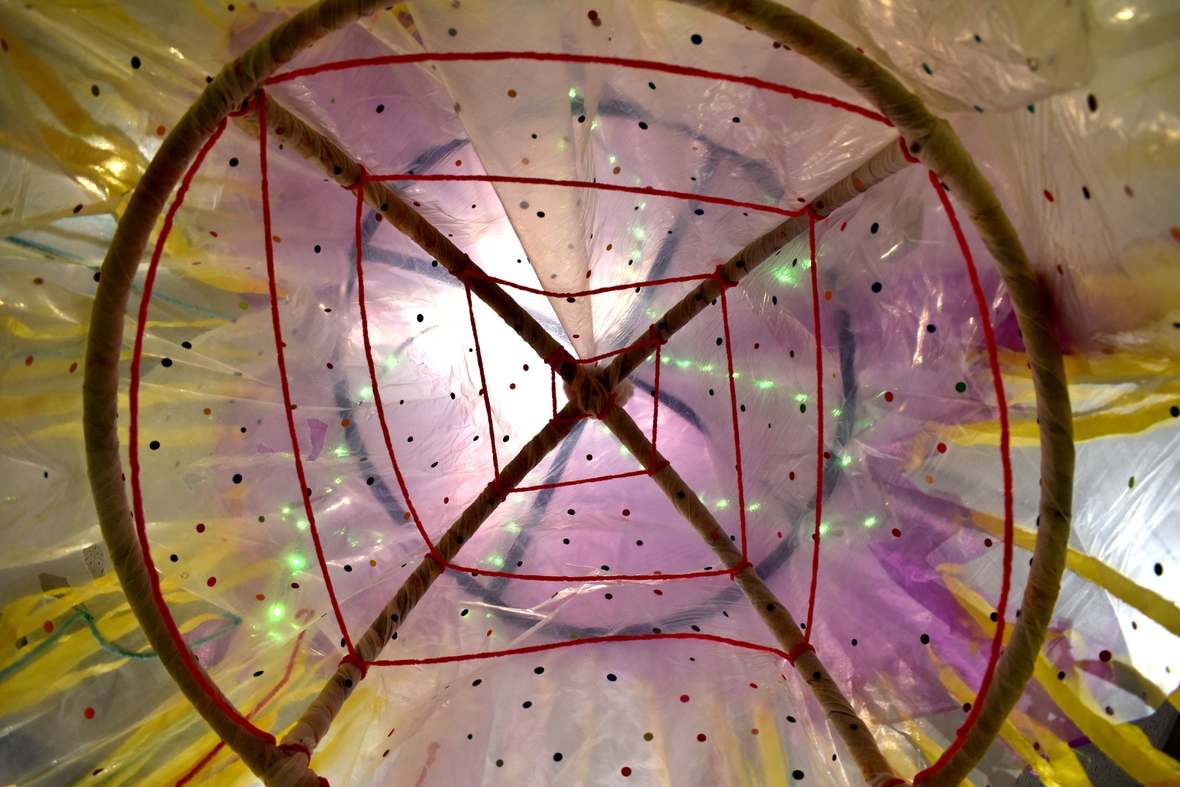
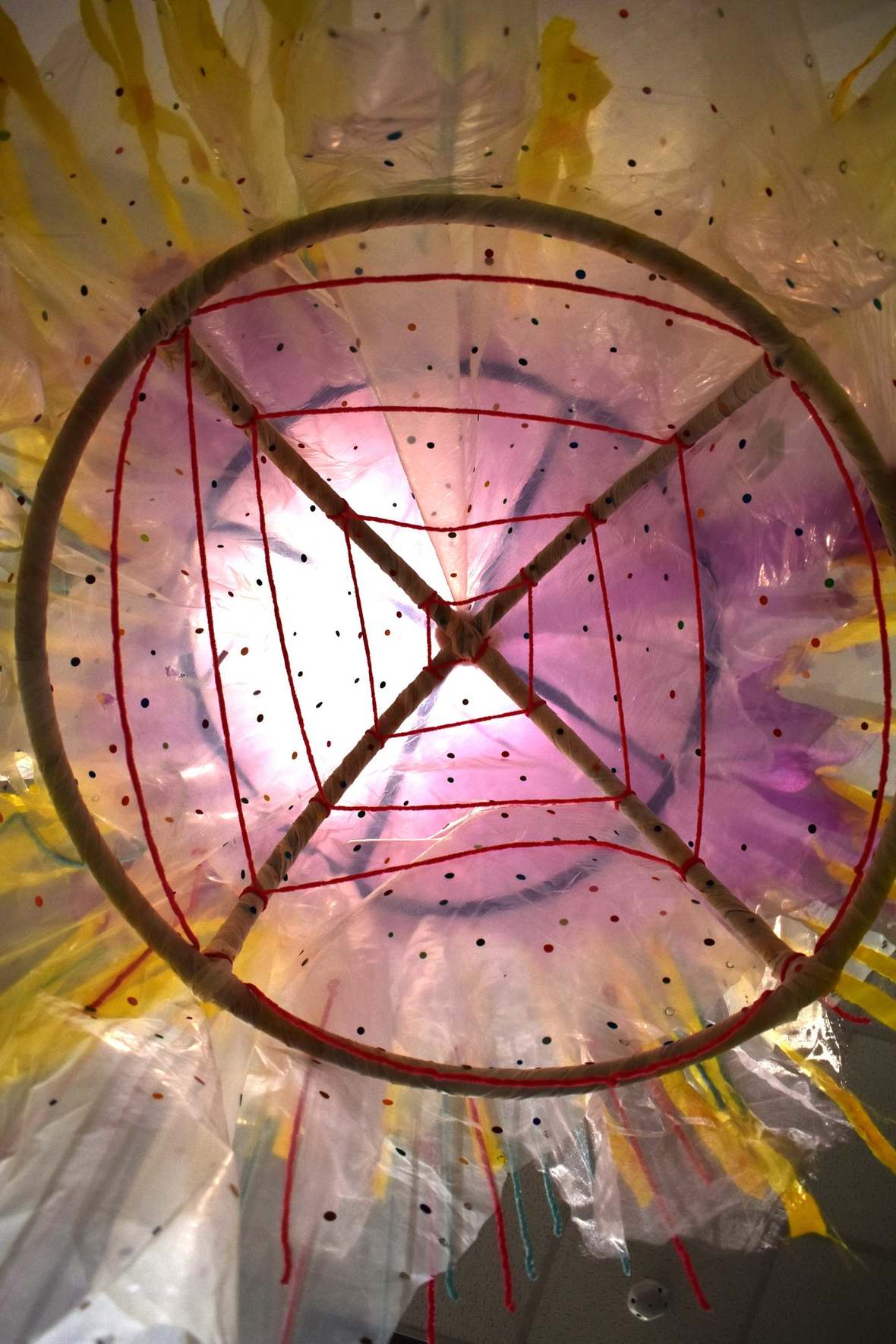
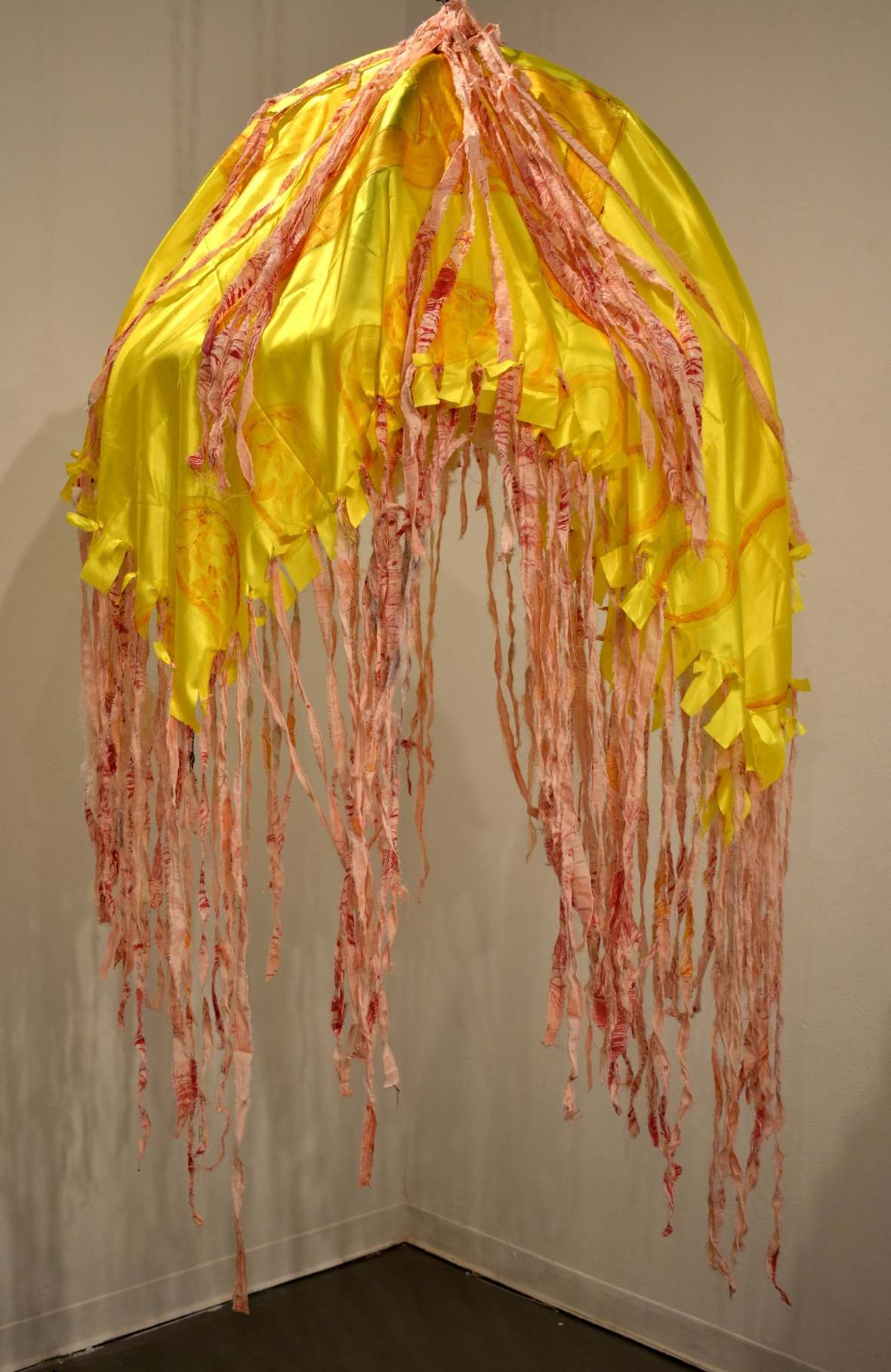
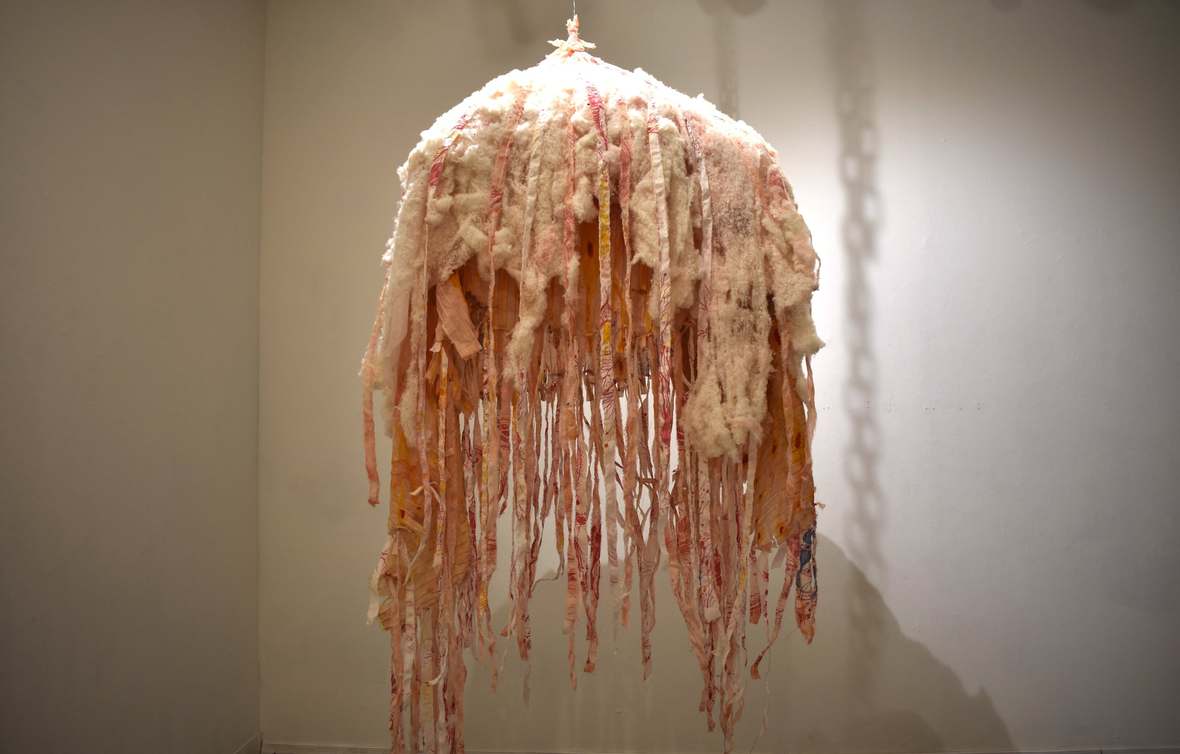
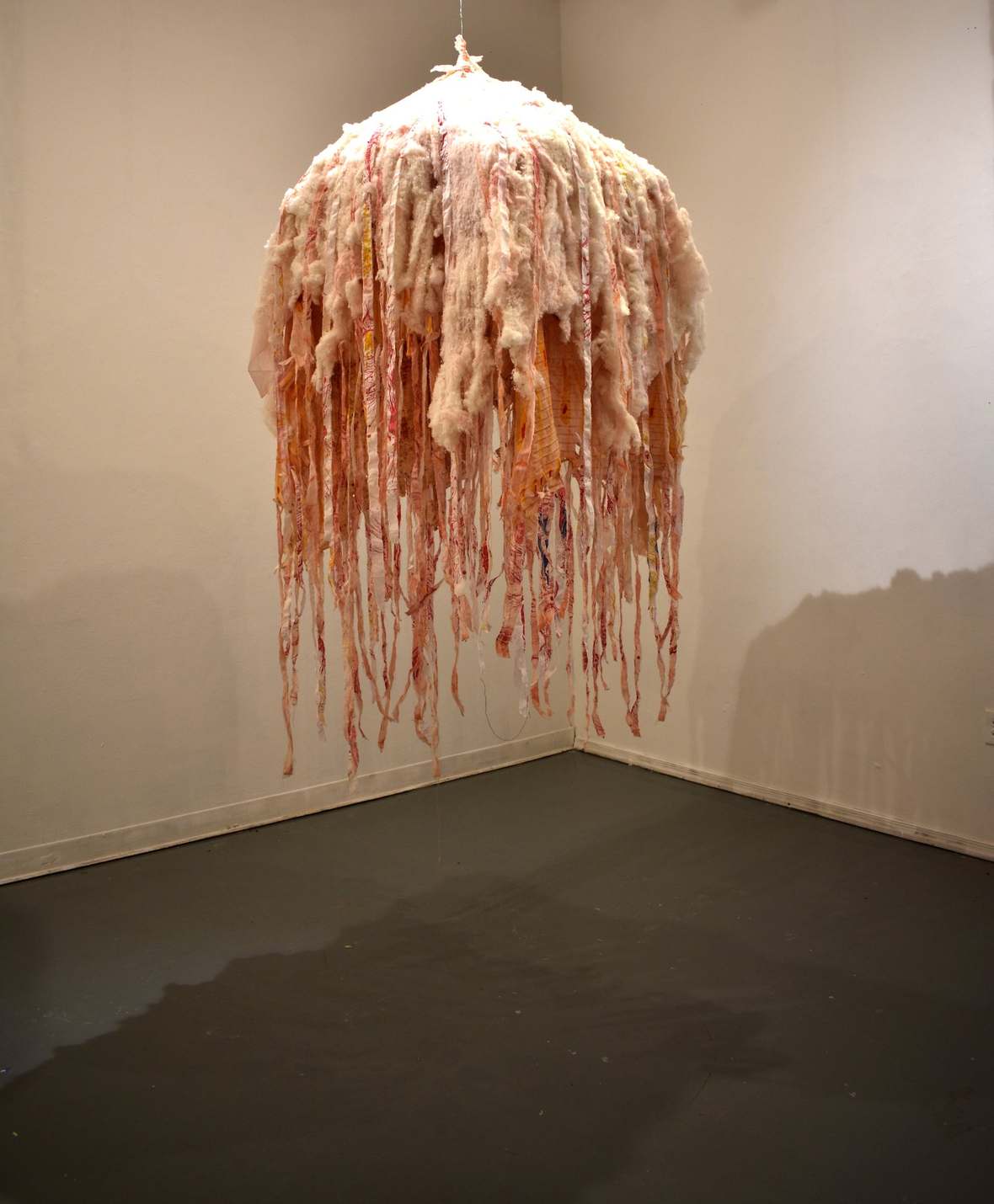
Four suspended chambers, each built around a single sense — whisper, scent, light, proprioception. A visitor lifts the edge, steps under, and the gallery is replaced by a printed interior at the scale of one body.
The Whisper Chamber came first, in 2024, and set the terms for the three that followed.
About this work
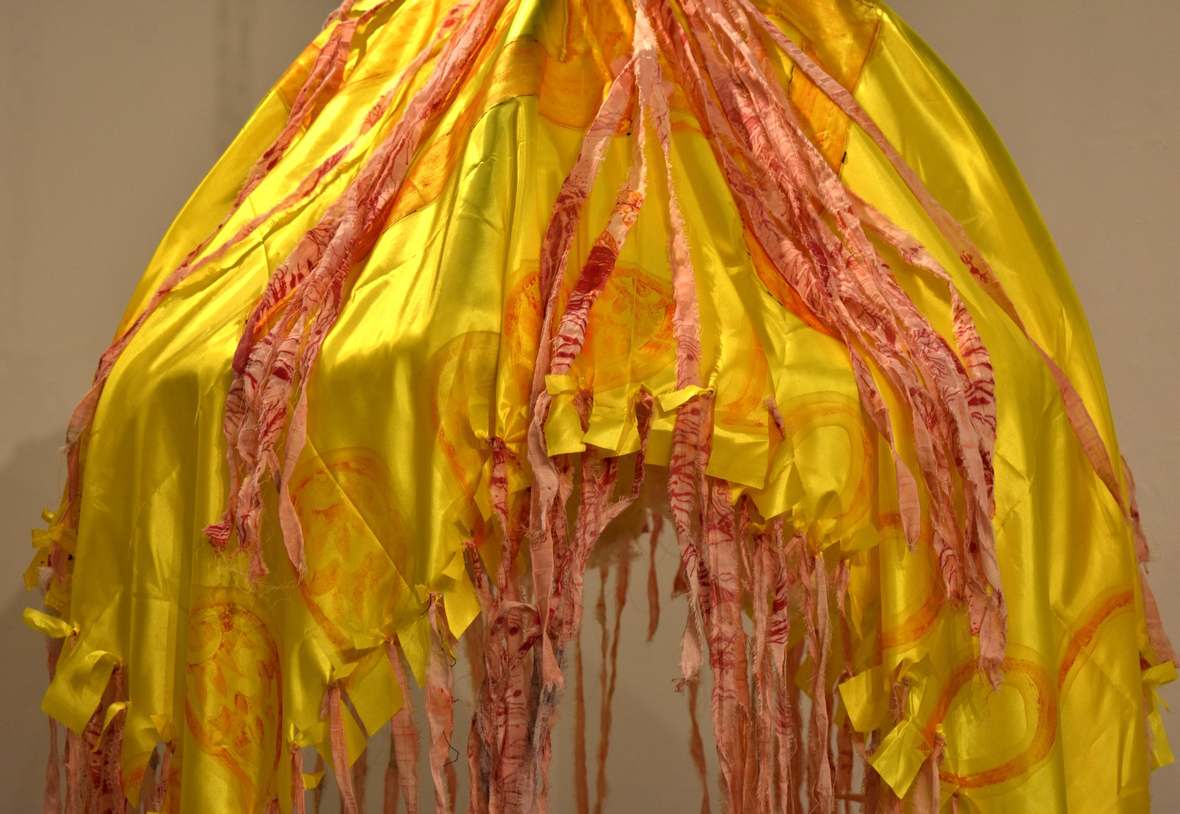
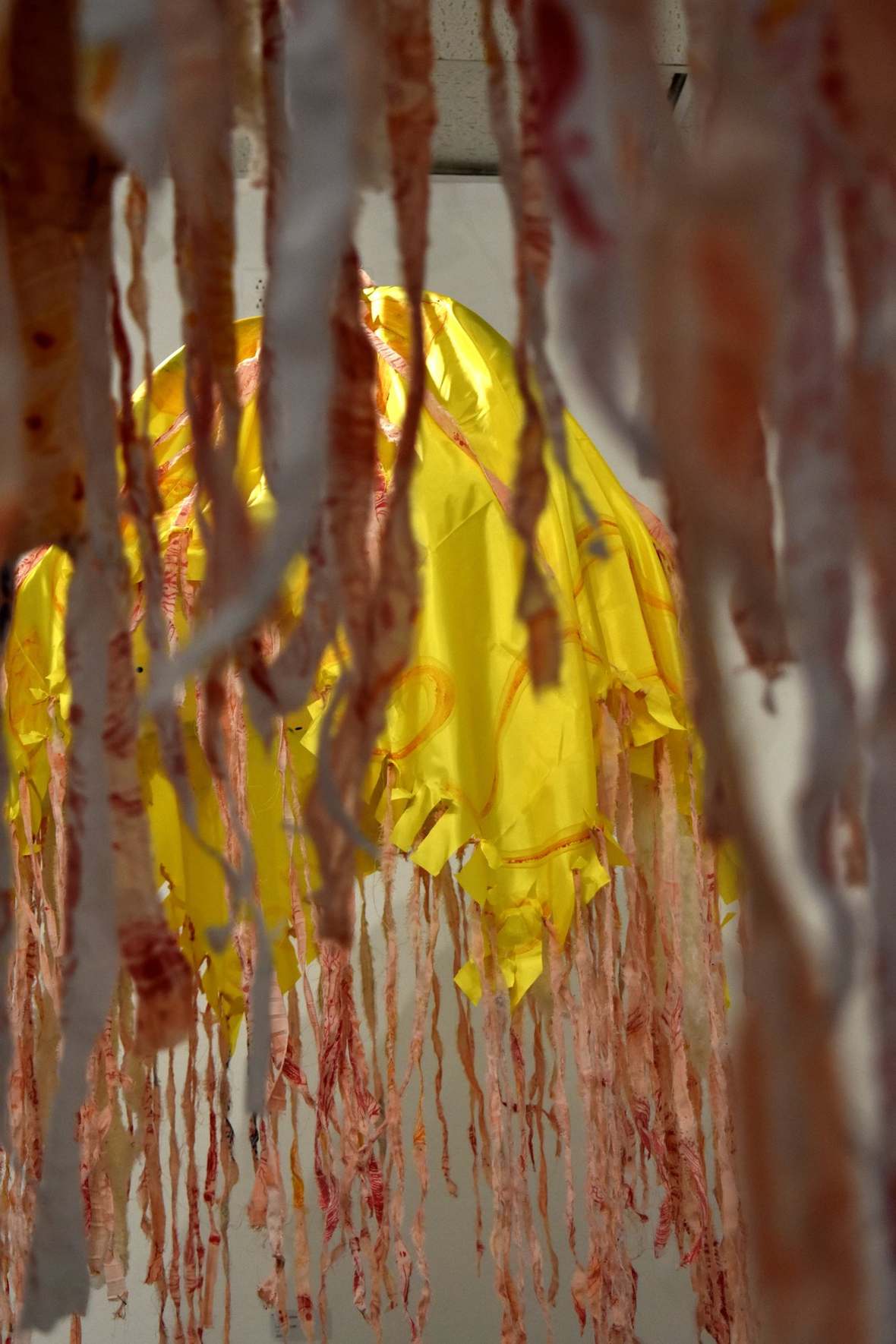
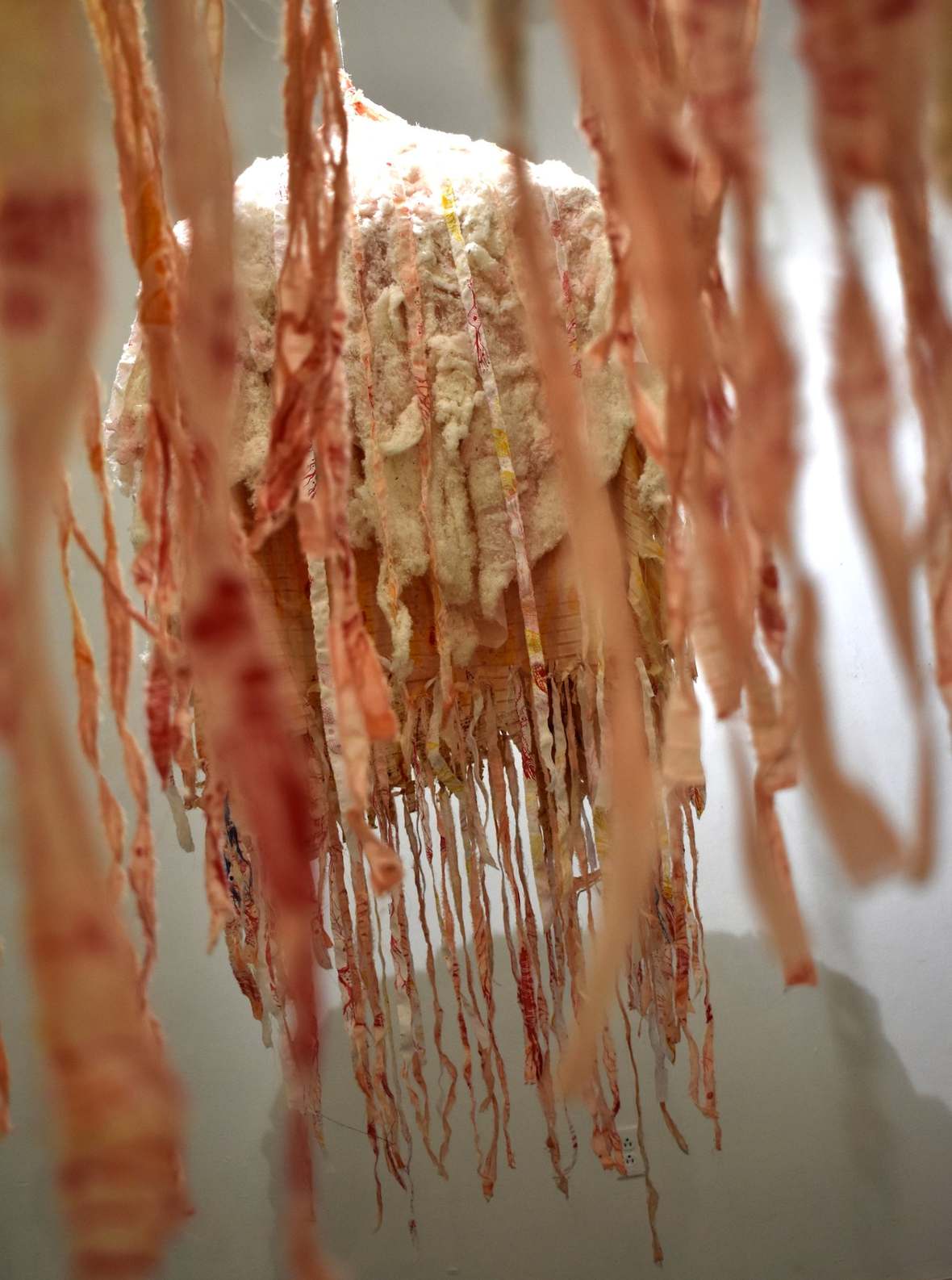
Every surface is printed. Screenprint and etching go down on organza, muslin and handmade pulp before any of it is cut or hung, so the chamber is a print first and a structure second. The strips that hang to the floor are the same printed cloth, slit and left to move.
What changes between the four is what the chamber does to a body. The Light Chamber carries LEDs sewn into its canopy and turns the wearer green, then violet. The Scent Chamber holds its own air. The Whisper Chamber muffles the room down to your own breathing. The Proprioception Chamber is heavy enough that you feel where your shoulders are.
This is the same project as the neuron drawings and the EEG installations, arrived at from the other side. Instead of picturing the brain’s architecture, the chambers put a body inside a structure that isolates one channel of it, so the sense being studied is the one you are using.
The Whisper Chamber developed at the University of Delaware, 2024. Shown in Compendium, Mechanical Hall Museum, University of Delaware, and Compendium, MFA Thesis Exhibition, Delaware Contemporary, Wilmington, 2025.